77% of U.S. Family Caregivers Say They’re at a Breaking Point
-
 By
Tiff Perritt
By
Tiff Perritt
Key Takeaways:
- More than half (57%) of U.S. family caregivers say they’ve reduced their work hours just to care for their loved one. 11% quit their jobs altogether.
- 1 in 4 family caregivers spends $6,000+ annually on critical hygiene supplies, such as diapers, bed pads, and wipes.
- 1,144 survey responses from our 2026 Caregivers in Crisis survey reveal how much families are spending on basic care supplies, the true career toll of caregiving, and its unseen emotional cost.


“The emotions involved are not for the faint of heart,” says just one of 63 million family caregivers.
Family caregivers make up nearly a quarter of the entire U.S. adult population. For them, assisting a loved one has become their daily reality, as many provide care — often unpaid — while trying to keep up with rising costs.
More than half (57%) of U.S. family caregivers say they’ve reduced their work hours just to care for their loved one, while 11% quit their jobs altogether.
Another 89% report that they wish their doctors provided more resources.
We conducted the 2026 Caregivers in Crisis survey to find out more about what family caregivers are facing and what systemic changes can’t wait any longer.
What Is a Family Caregiver? Plus, the True Cost Behind Care
A family caregiver is someone who helps care for a loved one who needs extra support due to age, illness, disability, or a health condition.
For adults, that may encompass assisting someone with Alzheimer’s disease, stroke recovery, cancer, or age-related decline; for children, their need for medical care may stem from developmental disabilities, complex medical needs, or behavioral health conditions.
Most family caregivers help a parent, spouse, child, grandparent, sibling, in-law, extended family member, or friend while also juggling a full-time job, family responsibilities, and medical needs.
Others handle added pressure, such as caregivers caught in the “sandwich population,” who are caring for aging loved ones while raising children of their own.
The price to pay for this care is as emotionally taxing as it is financially costly.
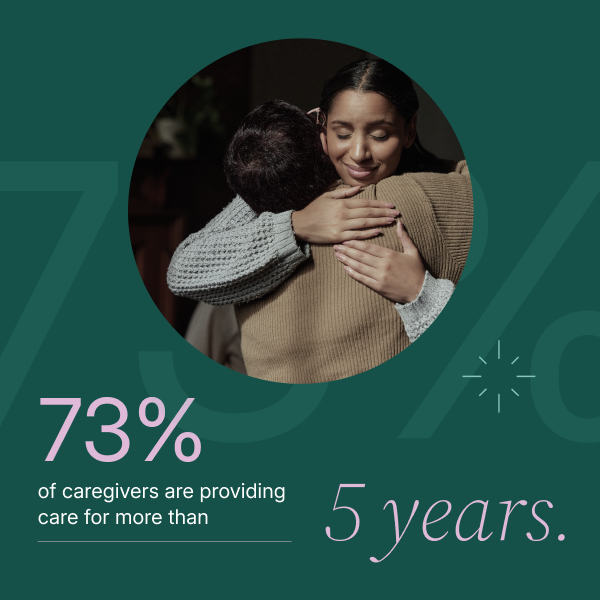
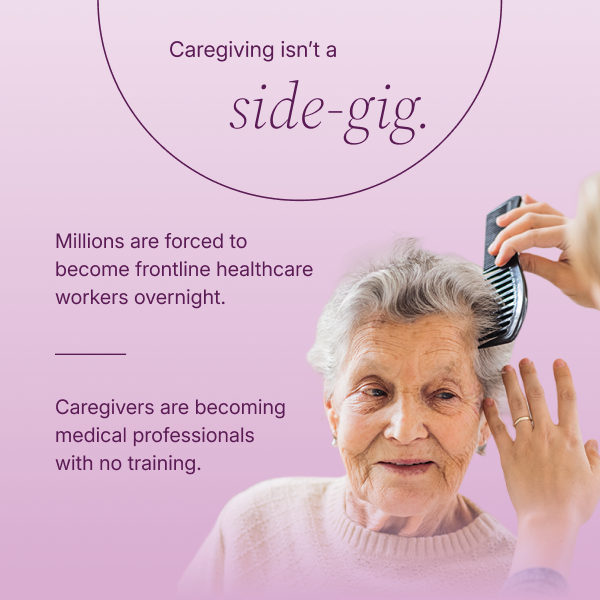
Seventy-three percent of family caregivers we surveyed said they’ve been providing care for more than 5 years, typically providing this care unpaid. Meanwhile, nearly half of all family caregivers said that they’re responsible for high-intensity tasks, like daily hygiene and mobility assistance, without receiving any formal medical training.
Caregivers Call for a Clear Path to Paid Support
While paid family caregiver support programs are available through Medicaid home care programs across the country, the rules vary by state.
Still, many caregivers report that they don’t know where to even begin.
“I wish I knew how to apply to become a paid caretaker. In doing so, I could afford to take proper care of my father, who has end-stage renal disease,” one caregiver stated. Another shared the same frustration: “There is not enough guidance to navigate the healthcare system.”
Lack of a clear path to paid caregiving also threatens the broader United States economy. Families are contributing more than $1 trillion in unpaid care at the expense of their own financial mobility.
As continued cuts to Medicaid and Medicaid work requirements are set to take effect in 2027, many families face growing uncertainty about navigating an already strained, complex healthcare system.
90% of Family Caregivers Report Feeling Emotional Distress
Despite most family caregivers stating that they’re overwhelmed with the cost of caregiving, some Americans are placing their mental health concerns at the forefront.
“Caregiving is emotionally draining. I love my wife, but I didn’t realize how hard it would be,” said one spouse we surveyed.
Another expressed the totality of their situation, stating, “It’s very isolating and lonely. You want what’s best for your loved one, but especially if there is cognitive decline, there’s just… no escape. You live where you work, while also grieving loss after loss of the person you love, of a personal life, and guilt about all of it.”
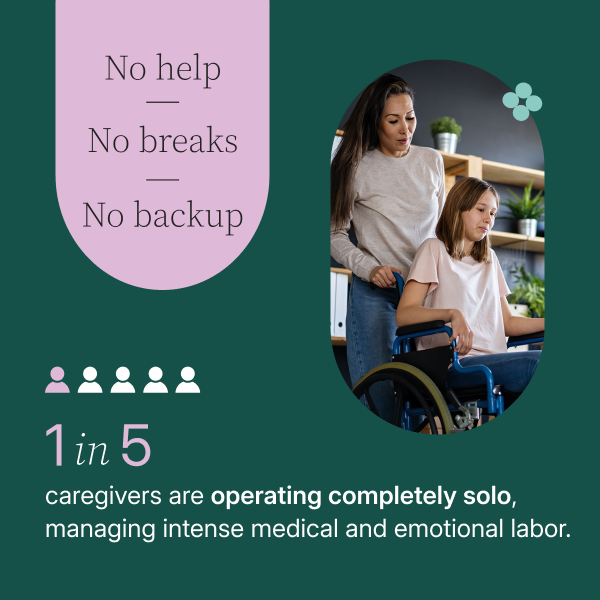
Two-thirds of respondents pointed to the lack of personal time and self-care as the biggest culprit of their emotional distress.
Some healthcare professionals speak out about this overlooked part of the role:
"This goes back to the lack of resources and the ability to provide effective respite care for these family caregivers. A 30-minute break once a week is not enough, and a night 'off' doesn't provide the long-term support these caregivers deserve," said renowned board-certified physician assistant Aleece Fosnight, MSPAS, CSC-S, CSE, NCMP, IF, HAES."
How Can the U.S. Fix the Caregiving Crisis?
As the country’s population ages, the demand for caregivers will only continue to grow.
Baby boomers, which includes people born between 1946 and 1964, have nearly all reached retirement age, leaving Gen X and millennials scrambling.
Today, families are already trying to figure out care with little guidance. For those caring for someone with complex health needs, the career, emotional, and financial cost of basic supplies, such as diapers, wipes, or first-aid products, can become overwhelming.
Many are also falling through the cracks of a systemically flawed healthcare system, sharing that their family was ”labeled as “too rich” to need help… anything that helps the caregiver is considered uncovered by the insurance company, most things required to keep [my loved one] clean and healthy (i.e. free from infection) are not covered, they took away the assistance she got for food because we pooled our resources as a family and cooked together to save money and she can never move out because we would have to dump her at a homeless shelter before [the government] would offer assistance.”
Relief can’t wait.
The onus now falls on policymakers and healthcare organizations to reform caregiving coverage before more families are pushed to a breaking point.
Check your coverage for $0 incontinence supplies with Medicaid or Insurance now!
Resources & Support
Our commitment goes beyond providing bladder control supplies. We launched our Caregivers in Crisis campaign to give caregivers a voice, advocate for policy change, and connect families with the resources they need.
Are you a family caregiver?
We’re here for you. Get support for your loved one by receiving $0 bladder control supplies covered through Medicaid or insurance.

Submit your loved one’s information, call their doctor, select their products, and we'll ship them to you each month.
Are you a healthcare provider?
We recognize your patients need support, and we’re here to assist. To do that, we connect them to $0 incontinence supplies covered through Medicaid or insurance.
Our 2-Step Referral Process:
-
Diagnose & prescribe: If your patient has a medical need for incontinence supplies and is enrolled in a qualifying insurance plan, download our Patient Order Form to prescribe the appropriate products.
-
Connect with Aeroflow Urology: Ask your patient’s caregiver to submit their loved one’s insurance information through our form, and we’ll help determine coverage and next steps.
Frequently Asked Questions
I’m part of a caregiver family and need support. Where can I go?
Start with your loved one’s doctor, insurance provider, Area Agency on Aging via the Eldercare Locator, or caregiver support organizations. Area Agencies on Aging are part of the Older Americans Act network, which may connect you with respite care, transportation, meals, and other support services to help with your caregiving responsibilities.
Can family caregivers get paid?
Yes, you can get paid to take care of a family member through Medicaid, VA benefits, or state-specific programs. However, rules for family caregiver pay vary by state. Your eligibility and pay rate will depend on the program, relationship to the care recipient, and the level of care they need.
Are caregiving supplies covered by Medicaid or insurance?
Yes, some Medicaid and health insurance plans cover the cost of caregiving supplies when there is a medical need. However, coverage depends on your loved one’s insurance plan, state rules, and their medical diagnosis. Their insurance may cover the full cost or reduce the cost of their supplies.
What is long-term care insurance?
Long-term care insurance helps pay for support if your loved one needs help with the activities of daily living, such as bathing, dressing, or eating. Medicare won't cover this type of care, but Medicaid may cover home health care, adult day care, or nursing home care for your loved one.
How can your loved one’s retirement age affect caregiving plans?
Full retirement age, or FRA, depends on when your loved one was born. This is because it can affect when they can receive Social Security benefits. At age 65, they may qualify for Medicare, but it typically won’t cover long-term daily care. Medicaid is based on income and care needs.
Mica Phillips

Mica has been at Aeroflow for over ten years. He brings creativity to a sometimes stagnant and complacent industry and tries his best to uncomplicate the complex world of Insurance. He is a graduate of the University of North Carolina and holds a Bachelor’s degree in English. In addition to his daily responsibilities as Executive Vice President of Aeroflow Urology, he’s contributed to numerous articles for online journals regarding senior care, incontinence, and navigating insurance benefits. In his spare time, he enjoys listening to live music, visiting breweries, and traveling the world with his wife and daughter.
About the Author
Tiff Perritt is the Content Writer at Aeroflow Urology. She writes with clarity and compassion on topics surrounding incontinence, aiming to help patients feel informed and supported. Driven by a strong interest in health equity, she supports efforts that promote education and access to incontinence care for underserved communities.
She earned her Bachelor's degree in Technical Communications from University of Houston - Downtown and her Associate's degree in English from Lee College. Her work has been featured by leading healthcare colleges and respected healthcare organizations across the country.
Outside of work, she loves to hike across the Texas landscape, try out new baking recipes, and spend time with her family.
Sources
Caregivers in Crisis Survey. 2026 Family Caregivers in Crisis Survey. Aeroflow Urology
References
AARP & National Alliance for Caregiving. (2025, July 24). Caregiving in the US 2025. AARP.
Burns, A., Wolk, A., & Watts, M. O. (2026, January 5). Medicaid’s home care support for family caregivers in 2025. KFF.
Centers for Medicare & Medicaid Services. (n.d.). Long-term care. Medicare.gov.
CNBC. (2026, June 10). CPI inflation report May 2026.
Social Security Administration. (n.d.). Retirement benefits.
U.S. Department of Health and Human Services, Administration for Community Living. (2026, March 2). Eldercare Locator.
Wynn, P. (2026, March 26). Family caregivers account for $1 trillion in essential care. AARP.
Disclaimer
Information provided on the Aeroflow Urology blog is not intended as a substitute for medical advice or care from a healthcare professional. Aeroflow recommends consulting your healthcare provider if you are experiencing medical issues relating to incontinence.
Eligibility and coverage are determined by your state Medicaid program and/or insurance plan. Coverage, quantity limits, medical necessity requirements, and prior authorization requirements may apply.