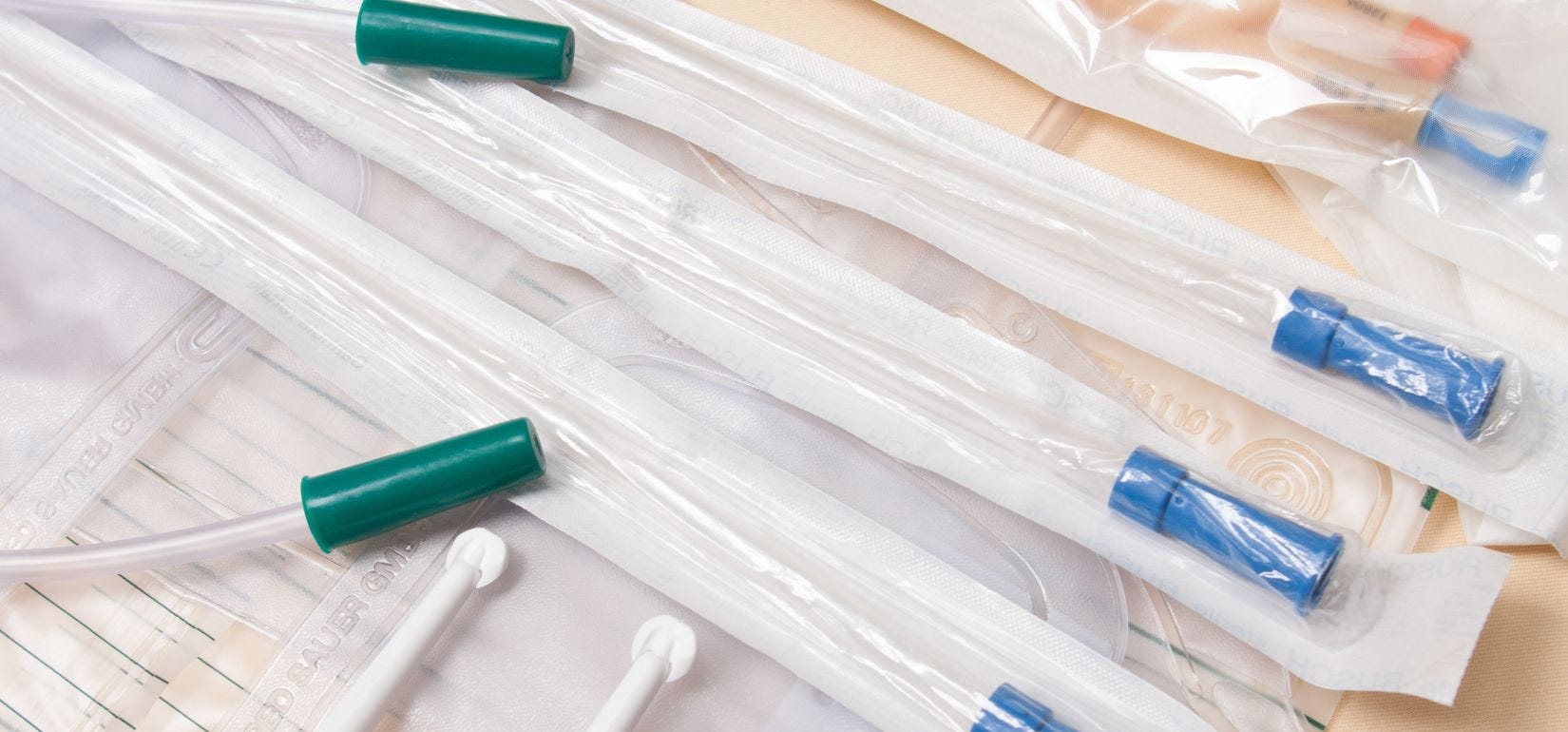
Self-Catheterization (CIC) Guide for Men & Women

Key Takeaways:
- Intermittent self-catheterization is a way to empty your bladder using a catheter that’s inserted when needed and removed right after use, usually several times throughout the day.
- There are several types of intermittent catheters, including straight tip, hydrophilic (pre-lubricated), coudé tip, and closed system, each designed for different comfort levels and medical needs.
- Intermittent catheterization is preferable to chronic indwelling urethral or suprapubic catheters in some patients with bladder emptying dysfunction.


If you have difficulty emptying your bladder, you may need to perform self-catheterization. This is also known as intermittent catheterization.
Whether you’re learning to self-catheterize for the first time or are caring for a loved one, this guide outlines the different types of intermittent catheters, how to prepare for catheter insertion, and the steps to perform safe self-catheterization for both males and females.
What Is Self-Catheterization?
Self-catheterization, also called clean intermittent catheterization (CIC) or intermittent self-catheterization (ISC), is a way to fully empty your bladder if you have difficulty peeing.
It involves inserting a thin, flexible tube into your bladder through your urethra. Your urine drains from the intermittent catheter into a collection container or the toilet. Once your bladder is fully empty, you remove the catheter. This process is repeated at regular intervals throughout the day, usually every four to six hours.
Your healthcare provider can show you how to use an intermittent catheter safely and which supplies to use to make the process easier, such as catheter lubricant and cleansing wipes. Because everyone’s needs are different, the type and size of the catheter you use may vary.
When Do People Need to Self-Catheterize?
If you have trouble fully emptying your bladder on your own, also known as urinary retention, you may need to self-catheterize. Emptying your bladder completely is important because when urine stays in the bladder too long, it can lead to infections and other complications.
You may need to self-catheterize if you have recently experienced or have:
-
Nerve-related bladder conditions that affect bladder control, such as cerebral palsy, spina bifida, cauda equina syndrome, multiple sclerosis (MS), Parkinson’s disease, stroke, or spinal cord injuries.
-
Urinary tract infections (UTIs), urethritis, or swelling that makes it hard for urine to pass.
-
Surgery (including bladder surgery), injury, or certain medications that affect bladder function.
-
Enlarged prostate or prostatitis.
-
Pregnancy or recovery after childbirth.
-
Severe constipation or pressure on the bladder.
Check your coverage for $0 incontinence supplies with Medicaid or Insurance now!
How Does Self-Catheterization Work?
Self-catheterization is a way for you to empty your bladder. It’s performed regularly to prevent your bladder from becoming too full, reduce pressure on the kidneys, and prevent infections or bladder damage.
Over time, many people build a routine that fits into their daily life, whether at home, work, or while traveling.
Your doctor can determine how often you should self-catheterize based on your condition and bladder function.
Choosing the Right Intermittent Catheter Type and Size
Choosing the right catheter depends on your needs, body, and comfort.
Common types of intermittent catheters include:
-
Straight tip (standard).
-
Coudé tip (curved tip for easier insertion).
-
Hydrophilic (pre-lubricated).
-
Uncoated catheters (require separate lubrication).
-
Closed system (includes an attached urine collection bag and helps reduce direct hand contact during use).
Catheters also come in different sizes, measured in French (Fr) units, which refer to the catheter’s diameter.
Many adult males commonly use intermittent catheter sizes 14 to 16 Fr, while most adult women use intermittent catheter sizes 12 to 14 Fr. Using the right size is important because a catheter that’s too small may drain slowly, while one that’s too large can cause discomfort.
How to Prepare for Self-Catheterization
Getting ready for self-catheterization the right way helps prevent infection and makes the process easier. Make sure all your supplies are nearby and easy to reach before you start.
Before you insert the catheter:
-
Wash your hands with soap and water.
-
Wash your genitals with soap and water, then gently cleanse with a clean towelette.
-
Carefully open your catheter from its package. Try to avoid touching the tip or insertion end to reduce the risk of contamination.
-
Apply lubricant if your intermittent catheter isn’t pre-lubricated.
Taking a few extra minutes to prepare can make the process smoother and reduce the risk of complications.
Note: You’ll usually catheterize on a regular schedule throughout the day, rather than waiting until your bladder feels very full. Call your healthcare provider if you notice persistent pain, resistance to catheter insertion, fever, or significant bleeding. Many patients find that the process becomes easier and more comfortable with practice.
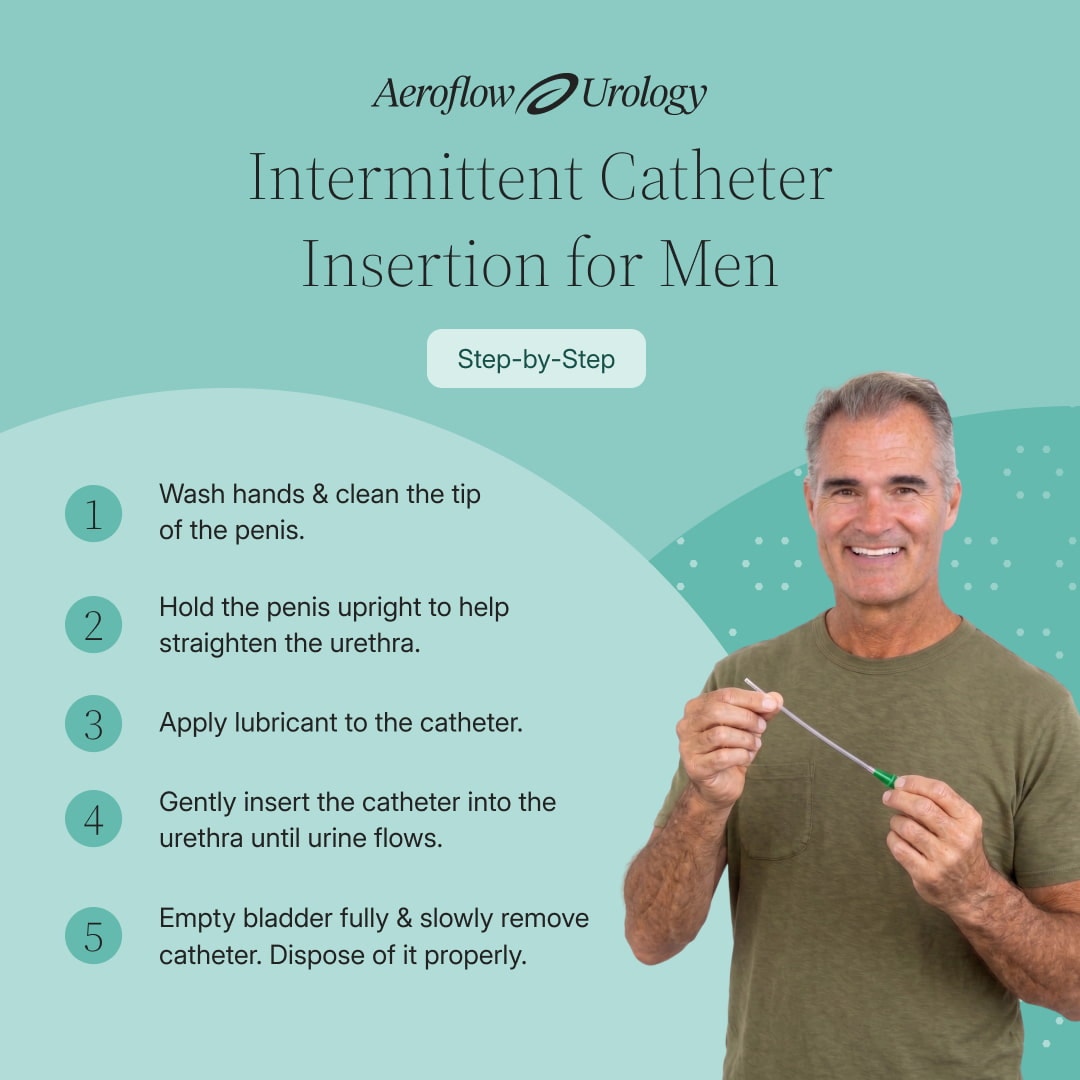
Step-by-Step Self-Catheterization Guide for Men
Follow this detailed step-by-step guide for men’s self-catheterization:
-
Wash and clean the tip of the penis with soap and water, then wipe down with an antiseptic wipe.
-
Hold the penis upright to help straighten the urethra.
-
Remove the catheter from the packaging, then carefully apply lubricant to the catheter.
-
Gently insert the catheter into the urethra until urine begins to flow through the tube.
-
Let your bladder fully empty, then slowly remove the catheter and dispose of it properly.
Step-by-Step Self-Catheterization Guide for Women
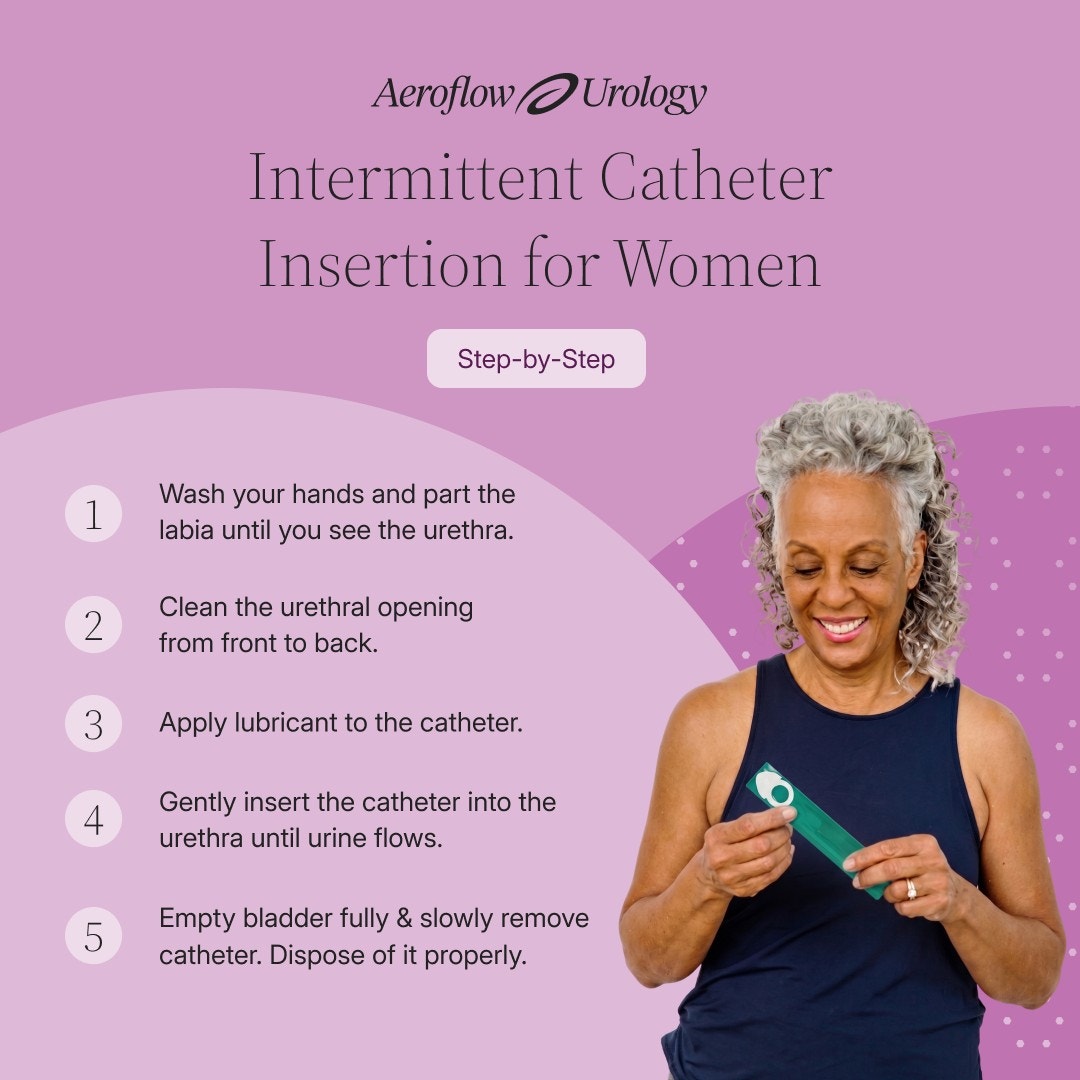
Follow this detailed step-by-step guide for women’s self-catheterization:
-
Wash your hands and part the labia until you see the urethra.
-
Clean the urethral opening from front to back.
-
Remove the catheter from the packaging, then carefully apply lubricant to the catheter.
-
Gently insert the catheter into the urethra until urine begins to flow.
-
Empty the bladder fully, then slowly remove the catheter. Dispose of the catheter properly.
Tip: Sitting or lying down can make self-catheterization easier. You may also find it helpful to use a mirror to locate the urinary opening.
Risks and Complications
While self-catheterization is generally safe when performed correctly, it still carries risks.
The risks of self-catheterization include:
-
Mild urethral irritation, bleeding, or scarring.
-
Bladder spasms or discomfort.
-
Rarely, a more serious urinary tract injury.
-
Kidney infections.
Following proper hygiene and technique can help lower these risks. If you think you may be experiencing complications from self-catheterization, contact your healthcare provider.
Get $0 Bladder Supplies With Medicaid or Insurance
If you need catheters or other supplies such as underpads or diapers, you may qualify to receive them at no cost through insurance.
Many plans, like Medicaid, private insurance, or dual eligibility insurance, may cover the cost of your bladder management supplies when there is a medical need.
Start saving up to $630 each month on urinary incontinence products. Plus, get them delivered to your door for free each month.
Frequently Asked Questions
How long can an intermittent catheter stay in?
Intermittent catheters are designed for short-term use. They should be immediately removed once your bladder is fully empty. Leaving your catheter in longer than needed can increase your risk of infection.
How many times a day should I self-catheterize?
Most people catheterize every 4 to 6 hours. However, the exact schedule depends on your fluid intake, bladder capacity, and how much urine your bladder retains. Try not to wait until your bladder feels very full.
Does self-catheterization hurt?
Self-catheterization should not be severely painful. You may feel mild pressure or discomfort at first when you begin self-catheterization. However, pain is not normal. If you experience pain, contact your healthcare provider.
Can you get a UTI from an intermittent catheter?
Yes, catheter use can increase the risk of urinary tract infection. especially if proper hygiene and catheter care are not followed. This type of infection is called a catheter-associated urinary tract infection (CAUTI), and the risk may increase when catheters are reused or left in too long.
Can intermittent catheters be reused?
Most intermittent catheters in the United States are designed and labeled for single use. Reusing catheters may increase the risk of urinary tract infections, irritation, or contamination if they are not cleaned properly.
What is a self-catheter kit?
A self-catheter kit is a ready-to-use package that includes the supplies needed for clean intermittent catheterization. Most kits include a catheter, lubricant, gloves, cleansing wipes, and sometimes a collection or collection bag, which can be helpful if you’re traveling.
Dr. Jason B. Carter

Dr. Jason B. Carter has been providing outstanding urologic care since 2003. He obtained his medical degree from East Tennessee State University and completed a residency at University Hospital and Clinics in Columbia, MO. He opened his private practice in the Greeneville, TN area in 2006.
Dr. Carter is board certified by the American Board of Urology. He is a member of the American Urological Association and the Tennessee Medical Association.
References
Centers for Disease Control and Prevention. (2024). Evidence review for catheter-associated urinary tract infection (CAUTI) guidelines. U.S. Department of Health and Human Services.
Neumeier, V., Stangl, F. P., Borer, J., Anderson, C. E., Birkhäuser, V., Chemych, O., Gross, O., Koschorke, M., Marschall, J., McCallin, S., Mehnert, U., Sadri, H., Stächele, L., Kessler, T. M., & Leitner, L. (2023). Indwelling catheter vs intermittent catheterization: is there a difference in UTI susceptibility? BMC infectious diseases, 23(1), 507.
Prieto, J. A., Murphy, C. L., Stewart, F., & Fader, M. (2021). Intermittent catheter techniques, strategies and designs for managing long-term bladder conditions. The Cochrane database of systematic reviews, 10(10), CD006008.
Disclaimer
Information provided on the Aeroflow Urology blog is not intended as a substitute for medical advice or care from a healthcare professional. Aeroflow recommends consulting your healthcare provider if you are experiencing medical issues relating to incontinence.