What is the Best Bladder Control Medicine?
-
 By
Tiff Perritt
By
Tiff Perritt
Key Takeaways:
-
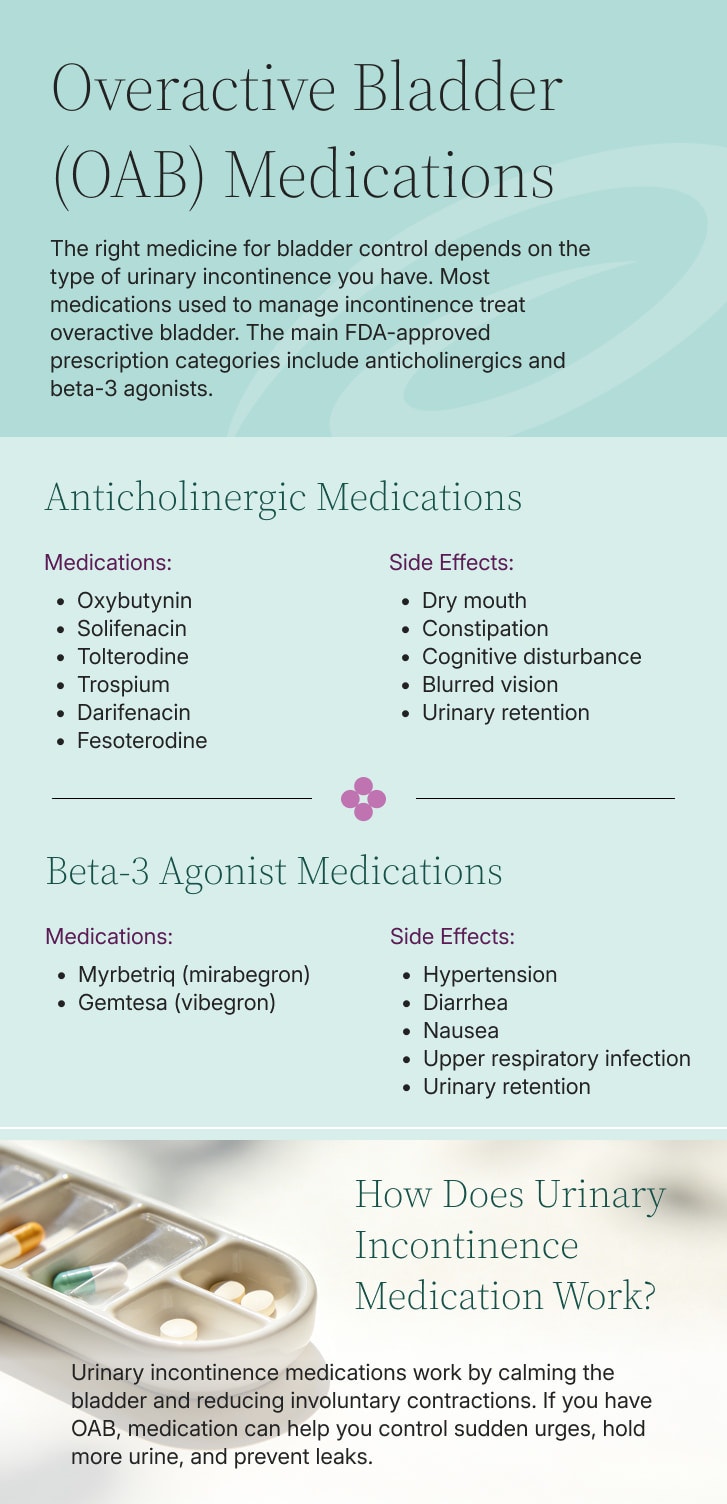
The best prescription medications for managing overactive bladder (OAB) include anticholinergic medications, such as solifenacin and tolterodine, and beta-3 adrenergic agonists, such as mirabegron and vibegron.
-
The only FDA-approved over-the-counter (OTC) medicine for overactive bladder is Oxytrol for Women (oxybutynin) in the form of a skin patch. However, before taking any OTC medication, always talk with your doctor.
-
Up to 30% of men and 40% of women in the U.S. have an overactive bladder. While OAB is more common in adults and older adults, some bladder control medications can be prescribed for children.
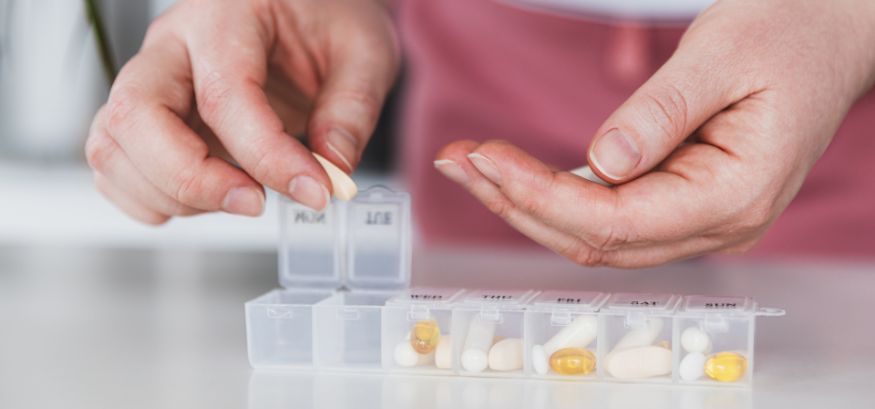
If bladder training or lifestyle changes aren’t treating your bladder control problems, medication may help. Many bladder control medications are used to treat overactive bladder (OAB), which can cause sudden urges to pee and frequent bathroom trips.
Some people with an overactive bladder may leak urine before they can make it to the restroom in time. This is a form of urinary incontinence called urge incontinence. Learn more about common bladder control medicines for adults, how they work, possible side effects, and other treatment options.
Anticholinergics
Anticholinergics are among the most common medications used to treat overactive bladder. They may help reduce sudden urges to pee and frequent urination.
Some anticholinergics come as pills or tablets, while others may come as a skin patch or gel. Anticholinergic medications may also come in an extended-release form once a day, which may help with side effects.
Common anticholinergic medicines include:
-
Oxybutynin
-
Tolterodine
-
Darifenacin
-
Solifenacin
-
Trospium
-
Fesoterodine
Tell your healthcare provider about all medications, vitamins, and supplements you take before starting an anticholinergic. These bladder control medicines may not be the best fit for some older adults, individuals with certain medical conditions, or people taking other medications.
How Anticholinergics Work
Anticholinergics block the chemical messenger acetylcholine, which can signal the bladder muscle to contract.
By blocking that signal, anticholinergics may help calm bladder contractions that happen too soon. They may help reduce the need for urgent bathroom trips or leaks when you can’t make it to the bathroom in time.
Risks and Side Effects of Anticholinergics
Anticholinergics can help with bladder symptoms, but they may cause side effects.
Possible side effects include:
-
Dry mouth
-
Constipation
-
Heartburn
-
Blurry vision
-
Fast heartbeat
-
Flushed skin
-
Trouble peeing
-
Memory changes or confusion
-
Skin irritation from the patch
Ask your healthcare provider if anticholinergics are a safe fit for you, especially if you are an older adult, are diagnosed with a medical condition, or take any other medication.
Check your coverage for $0 bladder control pads or diapers with insurance now!
Beta-3 Adrenergic Agonists
Beta-3 adrenergic drugs are another option for treating an overactive bladder. They work by relaxing the bladder muscle and may help with urgency and frequent urination.
These medications may be a better fit for people who cannot take anticholinergics or do not like their side effects. Your provider may look at your blood pressure, other prescriptions, and bladder symptoms before recommending one.
Common beta-3 adrenergic medicines include:
-
Mirabegron
-
Vibegron
These medications are usually taken by mouth. They are not a cure for an overactive bladder, but they may help reduce how often your bladder interrupts your day.
Tell your provider about all prescriptions, over-the-counter bladder control medicines, vitamins, and supplements you take before starting a beta-3 adrenergic medication.
Mirabegron (Myrbetriq)
Mirabegron is a beta-3 adrenergic agonist prescription medicine used to treat overactive bladder symptoms, such as urgency, frequent urination, and bladder leaks due to urgency.
Your provider may bring up mirabegron if you need OAB treatment but want to avoid some anticholinergic side effects, like dry mouth or constipation.
How Mirabegron Works
Mirabegron relaxes the bladder muscle so your bladder can hold more urine before you feel like you need to go.
Side Effects of Mirabegron
Mirabegron can raise blood pressure. This matters most if you already have high blood pressure or heart-related concerns. Your healthcare provider may want to monitor your blood pressure while you take it.
Possible side effects may also include:
-
Nausea
-
Diarrhea
-
Constipation
-
Dizziness
-
Headache
Mirabegron may interact with other medications. Make sure your healthcare provider has a full list of your prescriptions and knows your full medical history before you take mirabegron. Tell your provider if you notice any symptoms, including changes in your blood pressure.
Vibegron (Gemtesa)
Vibegron is a relatively new type of beta-3 adrenergic agonist medication that requires a prescription. It is used for overactive bladder and urge urinary incontinence.
This medication is typically available as a tablet and is taken once daily by mouth.
It may be an option if your provider thinks this type of bladder medicine is a good fit for your symptoms and medical history.
How Vibegron Works
Vibegron relaxes the bladder muscle. This can help your bladder store urine longer and reduce sudden urges to pee.
For some people, that may mean taking fewer bathroom trips throughout the day.
Side Effects of Vibegron
Some people do well on vibegron with only mild side effects. Others may notice they have a harder time fully emptying their bladder.
Possible side effects include:
-
Headache
-
High blood pressure
-
Nausea
-
Diarrhea
-
Cold-like symptoms
-
Urinary retention
Vibegron may interact with other medications. Make sure your healthcare provider has a full list of your prescriptions and knows your full medical history before you take vibegron. Tell your provider if you notice any symptoms, such as changes in your urine stream, trouble emptying your bladder, or still feeling like you have to pee after using the restroom.
Check your coverage for $0 bladder control pads or diapers with insurance now!
Onabotulinumtoxin Type A (Botox)
Botox isn’t limited to treating wrinkles. It can also be injected into the bladder muscle to help you manage OAB when other treatments haven’t eased your symptoms.
Unlike daily bladder medications, Botox is a procedure that must be done by a trained healthcare professional. For some people, bladder Botox can help for several months.
Your provider can explain how often injections may be needed and what follow-up care looks like.
How Does Bladder Botox Work?
Bladder Botox helps block signals that tell the bladder muscle to squeeze too often. This may reduce urgency, frequent urination, and leaks.
Risks and Side Effects of Bladder Box
While Botox can work well for some individuals, it still has risks. One of the main concerns with bladder Botox is urinary retention, which means your bladder may not fully empty.
Possible side effects of bladder Botox include:
-
Urinary retention
-
Trouble emptying the bladder
-
Pain or discomfort after the procedure
Ask your provider what to do if you have trouble peeing after bladder Botox.
Talk to Your Health Provider About Bladder Control Medicine
If you constantly feel like you need to pee or accidentally leak urine before you make it to the bathroom, bladder control medication may help.
Your doctor may prescribe an oral anticholinergic or beta-3 adrenergic agonist medication if lifestyle changes aren’t working. Botox may also help you manage the symptoms of an overactive bladder.
Make an appointment with your doctor to talk through your options.
Frequently Asked Questions
What is the best medicine for bladder control?
There isn’t one “best” medicine for bladder control. For overactive bladder, some of the most common options include anticholinergics and beta-3 agonists, which can help calm the bladder, reduce urges, and leaks. The right choice depends on your symptoms, health history, and the type of medications you may currently take.
Do bladder control pills really work?
Yes, bladder control pills can work as they can help reduce sudden urges to urinate, bathroom trips, and leaks for some people. They may work best when paired with healthy habits, such as bladder training and reducing bladder irritants, like caffeine. Talk with your doctor about bladder management.
What’s the best over-the-counter medicine for overactive bladder?
Currently, the only FDA-approved OTC medicine for overactive bladder is the oxybutynin patch (Oxytrol for Women). A similar oxybutynin patch for men is available, but it requires a prescription. Talk with your healthcare provider to see if it’s the right fit for you.
What is the newest OAB medication?
Vibegron, sold under the brand name Gemtesa, is one of the newer medications available to treat the symptoms of an overactive bladder. It was FDA-approved in 2020.
Gemtesa vs. Myrbetriq, which is better?
The right bladder control medication depends on your healthcare provider’s recommendations. Both medications are beta-3 agonists and may cause similar side effects, such as constipation, dry mouth, headache, or nausea. Talk with your doctor if you have questions about urinary incontinence medications.
Can an OAB be cured by medication?
No, there is no medication that can cure OAB, but medication can help you manage your symptoms.
Can children take bladder control medications?
The FDA has approved some bladder control medications for children diagnosed with conditions such as OAB and neurogenic detrusor overactivity. Bladder control medication can be an option if your healthcare provider has already tried other treatments. Always talk with your child’s provider if you have questions about their bladder health.
About the Author
Tiff Perritt is the Content Writer at Aeroflow Urology. She writes with clarity and compassion on topics surrounding incontinence, aiming to help patients feel informed and supported. Driven by a strong interest in health equity, she supports efforts that promote education and access to incontinence care for underserved communities.
She earned her Bachelor's degree in Technical Communications from University of Houston - Downtown and her Associate's degree in English from Lee College. Her work has been featured by leading healthcare colleges and respected healthcare organizations across the country.
Outside of work, she loves to hike across the Texas landscape, try out new baking recipes, and spend time with her family.
Aleece Fosnight

Aleece Fosnight, MSPAS, PA-C, CSC-S, CSE, NCMP, IF, HAES is a board-certified physician assistant specializing in sexual medicine, women’s health, and urology.
In 2019, Fosnight opened up her own private practice, the Fosnight Center for Sexual Health, and implemented the sexual health grand rounds curriculum at her local hospital and residency program.
Fosnight is also the founder of the Fosnight Foundation, a non-profit organization dedicated to the education and training of professionals in the sexual health field and providing funding for access to healthcare services in her local community.
References
Cameron, A. P., Chung, D. E., Dielubanza, E. J., Enemchukwu, E., Ginsberg, D. A., Helfand, B. T., Linder, B. J., Reynolds, W. S., Rovner, E. S., Souter, L., Suskind, A. M., Takacs, E., Welk, B., & Smith, A. L. (2024). The AUA/SUFU guideline on the diagnosis and treatment of idiopathic overactive bladder. The Journal of Urology, 212(1), 11–20.
National Library of Medicine. (n.d.). Oxybutynin. MedlinePlus.
Wróbel, A., Serefko, A., Woźniak, A., Kociszewski, J., Szopa, A., Wiśniewski, R., & Poleszak, E. (2020). Duloxetine reverses the symptoms of overactive bladder co-existing with depression via the central pathways. Pharmacology Biochemistry and Behavior, 189, 172842.
Yale Medicine. (n.d.). Overactive bladder. Yale Medicine.
Disclaimer
Information provided on the Aeroflow Urology blog is not intended as a substitute for medical advice or care from a healthcare professional. Aeroflow recommends consulting your healthcare provider if you are experiencing medical issues relating to incontinence.