“Everything is impacted. My money, my time, my family, my job, everything.”
Desperate Families Speak Out:
“Everything is impacted. My money, my time, my family, my job, everything.”
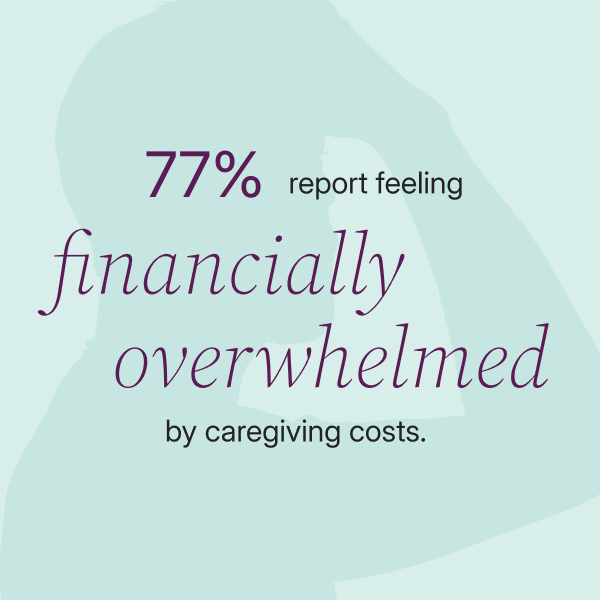
77% of Americans Are Drowning in Caregiving Costs
77% of Americans Are Drowning in Caregiving Costs
The price of care must change.
2026 Family Caregivers in Crisis Survey
Pressure is mounting. Fewer than 1 in 4 Americans can afford the cost of caregiving.
Our 2026 survey of 1,144 family caregivers uncovered what’s pushing so many to a breaking point, and what’s driving the crisis. We’re calling for broader changes nationwide while supporting adults and kids with $0 incontinence supplies like diapers and underpads.
An estimated 63 million Americans care for an adult or child with a medical condition or disability.1
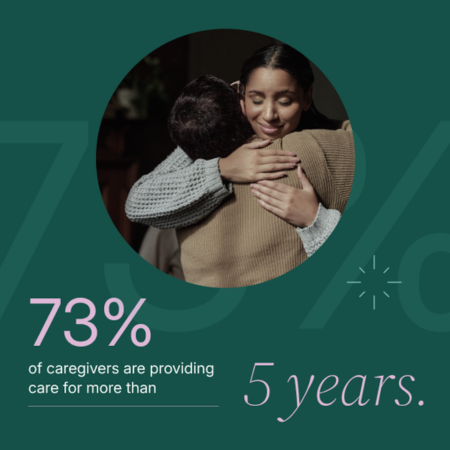
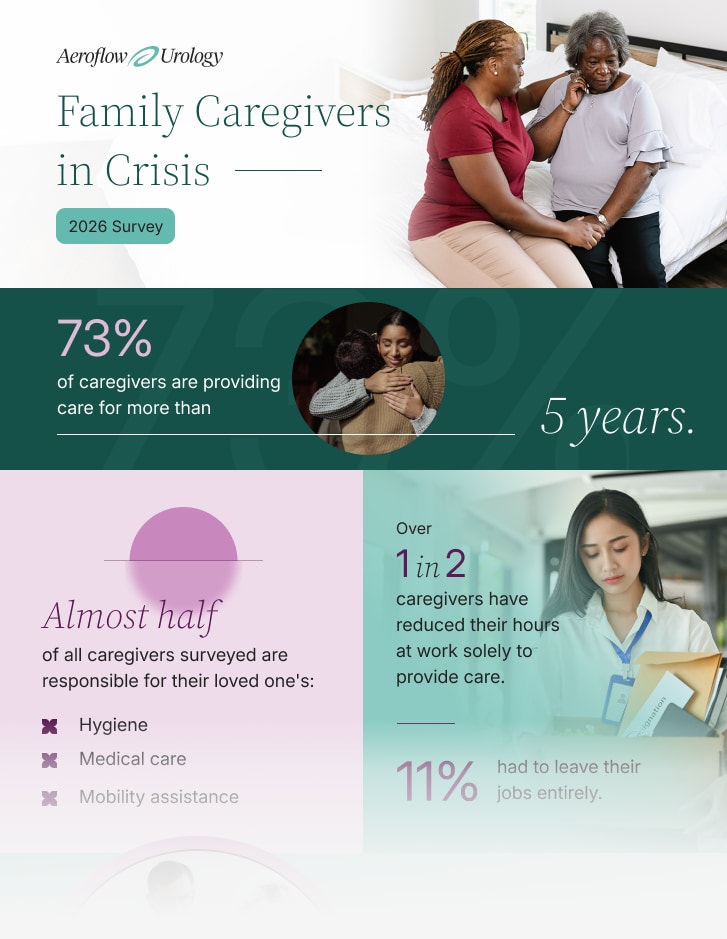
The majority of family members provide this care unpaid while balancing outside employment. For 73% of family caregivers, these responsibilities continue for more than 5 years.
Combined with rising costs and an increasingly complex healthcare system, many are left to navigate their loved one’s care with little to no support.
An estimated 63 million Americans care for an adult or child with a medical condition or disability.1
The majority of family members provide this care unpaid while balancing outside employment. For 73% of family caregivers, these responsibilities continue for more than 5 years.
Combined with rising costs and an increasingly complex healthcare system, many are left to navigate their loved one’s care with little to no support.
1 in 2 Family Caregivers Reduced Work Hours. 11% Quit Entirely.
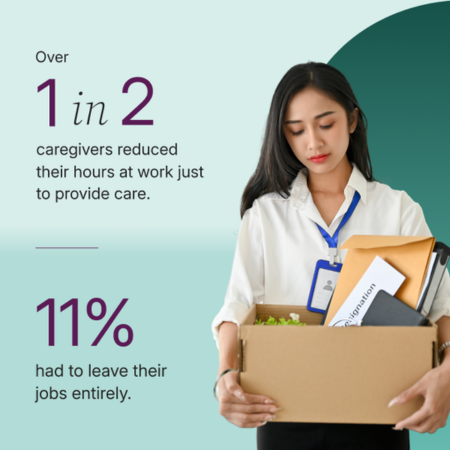
For many Americans, caregiving makes it difficult to maintain steady employment. When surveyed, more than half of respondents reported reducing their work hours due to the challenges of family caregiving.
However, for some Americans, reducing their work hours wasn’t enough.
11% of caregivers said they had to resign from their jobs just to care for a loved one.
For many Americans, caregiving makes it difficult to maintain steady employment. When surveyed, more than half of respondents reported reducing their work hours due to the challenges of family caregiving.
However, for some Americans, reducing their work hours wasn’t enough.
11% of caregivers said they had to resign from their jobs just to care for a loved one.
Rising Costs, Unimaginable Decisions
Often, the financial impact for family caregivers begins with lost income and compounds over time.
According to a 2026 AARP report, family caregivers already contribute a staggering $1 trillion in unpaid labor each year in the United States.2 Yet, many still pay out of pocket for essential medical supplies.
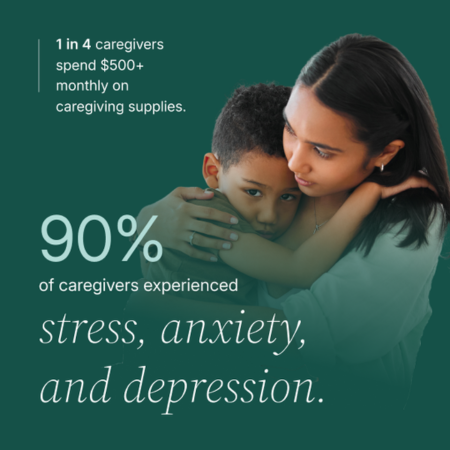
For 1 in 4 caregivers, the monthly cost of bladder control products exceeds $500 each month.
These costs fall on families caring for loved ones across all ages, including children, adults with disabilities, people with chronic illnesses, and older adults who require daily support.
When incontinence enters the picture, pull-ons, bed pads, and wipes become an unavoidable expense.
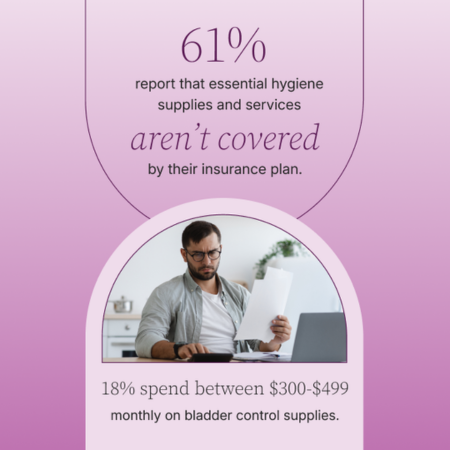
Out of 1,144 respondents from our 2026 Caregivers in Crisis survey, 61% stated that their loved one’s basic hygiene products, such as diapers or underpads, weren’t covered by their insurance plan.
When these supplies aren’t covered by insurance, families are forced to choose between buying what their loved one needs and paying for necessities, such as groceries, bills, gas, or their own care, often on limited incomes.
Nearly half of these caregiving households also reported incomes under $75,000 a year, with 12% scraping by on less than $25,000.
When incontinence enters the picture, pull-ons, bed pads, and wipes become an unavoidable expense.
Out of 1,144 respondents from our 2026 Caregivers in Crisis survey, 61% stated that their loved one’s basic hygiene products, such as diapers or underpads, weren’t covered by their insurance plan.
When these supplies aren’t covered by insurance, families are forced to choose between buying what their loved one needs and paying for necessities, such as groceries, bills, gas, or their own care, often on limited incomes.
Nearly half of these caregiving households also reported incomes under $75,000 a year, with 12% scraping by on less than $25,000.
A Strained Safety Net on the Brink
As systems fail to keep pace with the true cost of care, families are pushed to stack public assistance programs just to survive.
77% of caregivers on Medicaid said they rely on other government assistance programs to make ends meet. Of these households, 38% depend on the Supplemental Nutrition Assistance Program (SNAP) and Supplemental Security Income (SSI) to stay afloat.
Want to Share Your Caregiving Experience?
Want to Share Your Caregiving Experience?
Your story deserves to be heard. Whether you’re a family caregiver, know a family caregiver, work for a caregiving organization, or are a healthcare provider, we’re here to advocate for you.
Your story deserves to be heard. Whether you’re a family caregiver, know a family caregiver, work for a caregiving organization, or are a healthcare provider, we’re here to advocate for you.
Caregivers are being asked to do more at an increasingly unsustainable rate.
When surveyed, over half of family caregivers said that they were taking on complex care tasks for their loved ones without formal medical training.
Many are becoming full-time — often unpaid — caregivers while trying to manage responsibilities for which they have no formal training.
Caregivers are being asked to do more at an increasingly unsustainable rate.
When surveyed, over half of family caregivers said that they were taking on complex care tasks for their loved ones without formal medical training.
Many are becoming full-time — often unpaid — caregivers while trying to manage responsibilities for which they have no formal training.
An Alarming 57% of Caregivers Report Medical Complications
Family caregivers state that their loved one suffered more serious medical complications because they were unable to meet the demands of caregiving.
Sam Eaker, DNP, CPNP-PC, states that “serious complications due to insufficient care” should be viewed as a “preventable downstream effect of coverage gaps.”
When looking further, our survey also found that 89% of caregivers stated they felt “abandoned” by their doctors and were left to seek assistance and resources completely on their own.
For Fosnight, the message is clear: “We need to have more productive conversations around supply needs, financial constraints, and caregiver capacity.”
Family caregivers state that their loved one suffered more serious medical complications because they were unable to meet the demands of caregiving.
Sam Eaker, DNP, CPNP-PC, states that “serious complications due to insufficient care” should be viewed as a “preventable downstream effect of coverage gaps.”
When looking further, our survey also found that 89% of caregivers stated they felt “abandoned” by their doctors and were left to seek assistance and resources completely on their own.
For Fosnight, the message is clear: “We need to have more productive conversations around supply needs, financial constraints, and caregiver capacity.”
The Solution:
Simplify the Path to Paid Caregiving
One of the biggest barriers for family caregivers is knowing what support is available and how to access it.
In fact, out of 63 million caregivers, nearly 48 million are unpaid.3
Families may qualify for compensation or support through Medicaid or other insurance programs, but may not know:
Where to begin
What insurance benefits are available
How to get help without spending hours wading through paperwork
Some family caregivers are speaking out:
“I wish I knew how to apply to become a paid caretaker. In doing so, I could afford to take proper care of my father, who has end-stage renal disease.”
Help Caregivers Navigate the System
For more than 1 in 4 caregivers (28%), the greatest burden is understanding healthcare and insurance systems, not the physical care itself.
Paperwork should never be the hardest part of caregiving. Families need clear guidance and systems that reflect the realities of daily care.
Support Caregivers’ Mental Health
The impact is not only financial.
Over 1 in 5 caregivers said they are caring for a loved one without help from family, friends, or paid professionals. Many are doing this work alone while trying to manage work, personal responsibilities, and their own health.
For over 41% of caregivers, profound isolation and the feeling of being entirely unsupported are the single greatest emotional strain they face.
Some caregiver groups are disproportionately affected, including the “sandwich generation,” which makes up 16 million caregivers who are supporting aging parents while also raising children.3
The impact is not only financial.
Over 1 in 5 caregivers said they are caring for a loved one without help from family, friends, or paid professionals. Many are doing this work alone while trying to manage work, personal responsibilities, and their own health.
For over 41% of caregivers, profound isolation and the feeling of being entirely unsupported are the single greatest emotional strain they face.
Some caregiver groups are disproportionately affected, including the “sandwich generation,” which makes up 16 million caregivers who are supporting aging parents while also raising children.3
Increase Medical Supply Coverage
Families should not have to contend with complex systems to access basic supplies.
Whether caring for an adult or a child, supplies like diapers, underpads, wipes, gloves, and other products are not extras when someone depends on them every day.
Expanding coverage for supplies may not solve every challenge family caregivers face, but it may remove one of the most immediate and preventable sources of stress.
Are You a Family Caregiver?
Get support for your loved one by receiving $0 bladder control supplies covered through Medicaid or insurance.
How Our Process Works
Submit your information, call your doctor, select your products, and we'll ship them to you each month.
We’re here to help you support your patients by connecting them to $0 medical-grade incontinence supplies covered through Medicaid or insurance.
Our 2-Step Referral Process:
Diagnose & prescribe: If your patient has a medical need for incontinence supplies and is enrolled in a qualifying insurance plan, download our Patient Order Form to prescribe the appropriate products.
Connect with Aeroflow Urology: Have your patient’s caregiver submit their loved one’s insurance information through our form, and we’ll help determine coverage and next steps.
We are verifying your insurance coverage.Hang tight, this could take up to 60 seconds.
Frequently Asked Questions
Can a family member be a caregiver?
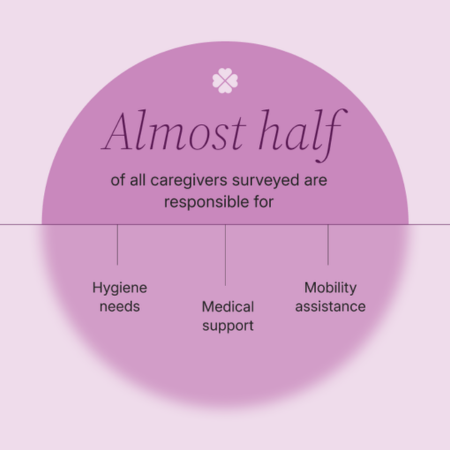
Yes. A family member can be a caregiver when they help a loved one with daily needs, such as hygiene, meal preparation, or transportation. Most family caregivers in the U.S. are unpaid, but some may qualify for pay through Medicaid, certain insurance programs, or VA caregiver benefits.
How can you become a paid caregiver for a family member?
Start by checking Medicaid, long-term care insurance, paid family leave, or veterans programs. Rules vary by state and program, so contact the appropriate office or insurance provider to learn whether you can be paid as a family caregiver. Learn more about paid family caregivers.
I’m overwhelmed, where can I get family caregiver support?
Start with your loved one’s doctor, insurance provider, or local Area Agency on Aging. The Eldercare Locator can help you connect with local resources, such as respite care, meals, transportation, caregiver training, and additional support for care at home.
What can I do if my loved one refuses help?
Start small. Ask what kind of support they would feel comfortable with, while continuing to prioritize their safety. If they still refuse help, consider reaching out to their healthcare providers for guidance on home health and additional supportive services, especially if their safety or any health issues are involved.
Information provided on the Aeroflow Urology site is not intended as a substitute for medical advice or care from a healthcare professional. Aeroflow Urology recommends consulting your healthcare provider if you are experiencing medical issues relating to incontinence.
Eligibility and coverage are determined by your state Medicaid program and/or insurance plan. Coverage, quantity limits, medical necessity requirements, and prior authorization requirements may apply.