90% of U.S. Family Caregivers Say They’re Stressed, Survey Finds
-
 By
Tiff Perritt
By
Tiff Perritt
Key Takeaways:
- More than 1 in 5 caregivers (21.33%) say they’re the only caregiver, with no help from friends or family.
- Nearly 50% of caregivers report feeling isolated or unsupported as a top emotional strain.
- Our 2026 Caregivers in Crisis survey lays out how family caregivers in the U.S. are feeling, and how this stress is impacting their health.


As cuts to critical government programs loom in a country that increasingly looks away from caregivers and their loved ones, families are being abandoned.
For more than 77% of caregivers, the cost of care has become unaffordable, and the failure of safety net systems is pushing caregivers into unimaginable levels of stress. Data from our 2026 Caregivers in Crisis survey found that nearly 1 in 2 caregivers report feeling isolated or unsupported as one of their top emotional strains.
“It's extremely anxiety-inducing. Your loved one solely depends on you for their care and to meet their needs. It's also severely taxing on someone's mental health and personal life,” says one family member.
We sat down with medical professionals and asked caregivers across the United States to better understand how they’re coping and what needs to change. Read what we discovered about the emotional toll of caregiving, and why families can’t be expected to continue managing this crisis alone.
Am I a Caregiver?
A caregiver is someone who helps someone who cannot fully care for themselves. This can include:
-
Children
-
Adults
-
Older Adults
Family caregivers are often called unpaid* or informal caregivers, unlike formal caregivers, who are trained, paid professionals.
*Family caregivers may qualify for payment for their care, such as through their state's Medicaid self-directed care program, also called consumer-directed care.
How Caregiver Roles Begin
Many enter the role without ever agreeing to it out loud. For some, it can begin with helping out with smaller tasks for a young child or aging parent, such as:
-
Driving to medical appointments
-
Picking up medications
-
Planning and cooking meals
As the needs of the person you care for grow, the role may shift from simple family emotional support into daily, overwhelming responsibilities.
They can sometimes become the primary, or only, caregiver. In fact, more than 1 in 5 caregivers (21.33%) say they’re operating as the sole caregiver with no assistance from family, friends, or professionals. Studies show that women also account for the majority of caregivers (61%) in the United States.
However, they’re not the only ones paying the price.
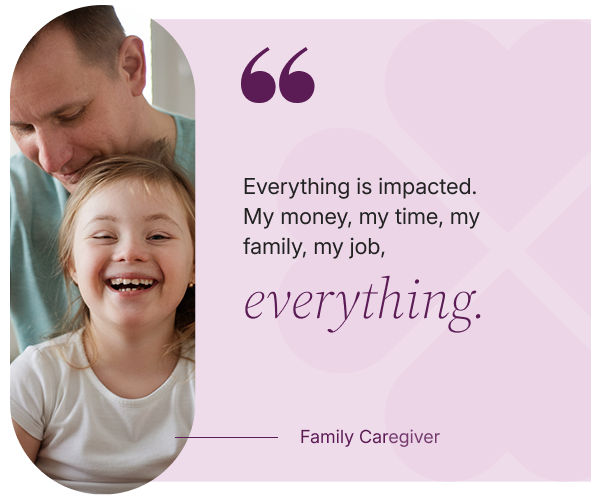
"Everything is impacted. My money, my time, my family, my job, everything."
Our survey found that up to 57% of caregivers said their loved one experienced “serious complications from not receiving enough care.”
Medical professionals are sounding the alarm on this concerning statistic. Board-certified pediatric nurse practitioner, Dr. Samantha Eaker, DNP, CPNP-PC, states, “this finding should be viewed as a preventable downstream effect of coverage gaps.”

The True Emotional Cost of Caregiving
“Mental health is hugely ignored in healthcare today, and that needs to change,” said one respondent.
With 63 million people (or 1 in 4 U.S. adults) as caregivers, the need for coordinated, systemic change is dire.
Particularly for caregivers who are helping loved ones long-term, the emotional and physical strain can become progressively harder to manage. Combined with constantly budgeting the cost of unexpected caregiving expenses that arise, like hospital visits or hygienic products, such as bladder control supplies, many are at risk of burnout.
Evidence supports that this constant level of stress can be potentially damaging as it can impact your immune system.
"We know that caregiver burnout isn't just an emotional issue,” says renowned board-certified physician assistant Aleece Fosnight, MSPAS, CSC-S, CSE, NCMP, IF, HAES. Fosnight goes on to state that caregiver burnout can even “contribute to poorer patient care, increased complications, and higher overall healthcare utilization. Meaning that it costs the system more in the end when we don't put those resources in at the beginning of care as a preventative approach.”
| Who Is Affected | Current Challenge & Impact | Needed Support |
|---|---|---|
| Family Members | Families are already functioning as the main safety net, often managing care with limited support while facing anxiety, isolation, financial pressure, and disruption to work or personal life. | Expand respite care, paid family leave, and make it easier to access caregiver resources. |
| Medical Professionals | Providers are already working within strained healthcare systems where limited services, funding gaps, and care-coordination barriers make it difficult to support patients consistently. | Stronger public funding, better care coordination, and expanded home and community-based support programs. |
Resources & Support
We’re committed to supporting you beyond providing bladder control supplies. We launched our Caregivers in Crisis campaign to give caregivers a voice, advocate for policy change, and connect families with the resources they need.
Are you a family caregiver?
We’re here to support your caregiving journey. Get support for your loved one by receiving $0 bladder control supplies covered through Medicaid or insurance.

Submit your loved one’s information, call their doctor, select their products, and we'll ship them to you each month.
Are you a healthcare provider?
We recognize your patients need support, and we’re here to assist. To do that, we connect them to $0 incontinence supplies covered through Medicaid or insurance.
Our 2-Step Referral Process:
-
Diagnose & prescribe: If your patient has a medical need for incontinence supplies and is enrolled in a qualifying insurance plan, download our Patient Order Form to prescribe the appropriate products.
-
Connect with Aeroflow Urology: Ask your patient’s caregiver to submit their loved one’s insurance information through our form, and we’ll help determine coverage and next steps.
Frequently Asked Questions
What is caregiver stress also known as?
Caregiver stress, or caregiver stress syndrome, is also known as caregiver burnout. It can happen due to the emotional and physical demands of caring for a loved one.
What are the signs of caregiver stress?
The most common signs of caregiver stress include feelings of irritability, anxiety, exhaustion, sleeplessness, and social withdrawal. However, the way that caregiver stress manifests, or shows up, is different for everyone. For some, it can mean you don’t feel like yourself, feel unusually tired, or get sick more often.
How can you manage stress as a caregiver?
Caregiver stress management strategies include asking for help, talking to a healthcare professional, taking breaks, sleeping more, setting boundaries, or joining a caregiver support group. While there isn’t a “perfect” way to deal with stress, even small changes can make a big difference.
How do I know if I need respite care?
You may need respite care if family caregiving is affecting your career, home life, relationships, mood, sleep, or health. If you’re able to, stepping away and letting a professional take care of your loved one can be an important part of maintaining your physical and mental well-being.
When should I go to the doctor for caregiver stress?
Talk with a healthcare provider, social worker, or mental health professional if you’re experiencing signs of caregiver stress. This can include feeling like caregiving is affecting your sleep, mood, appetite, energy, or daily life.
Mica Phillips

Mica has been at Aeroflow for over ten years. He brings creativity to a sometimes stagnant and complacent industry and tries his best to uncomplicate the complex world of Insurance. He is a graduate of the University of North Carolina and holds a Bachelor’s degree in English. In addition to his daily responsibilities as Executive Vice President of Aeroflow Urology, he’s contributed to numerous articles for online journals regarding senior care, incontinence, and navigating insurance benefits. In his spare time, he enjoys listening to live music, visiting breweries, and traveling the world with his wife and daughter.
About the Author
Tiff Perritt is the Content Writer at Aeroflow Urology. She writes with clarity and compassion on topics surrounding incontinence, aiming to help patients feel informed and supported. Driven by a strong interest in health equity, she supports efforts that promote education and access to incontinence care for underserved communities.
She earned her Bachelor's degree in Technical Communications from University of Houston - Downtown and her Associate's degree in English from Lee College. Her work has been featured by leading healthcare colleges and respected healthcare organizations across the country.
Outside of work, she loves to hike across the Texas landscape, try out new baking recipes, and spend time with her family.
Sources
Caregivers in Crisis Survey. 2026 Family Caregivers in Crisis Survey. Aeroflow Urology
References
National Library of Medicine. (n.d.). Caregivers. MedlinePlus.
AARP & National Alliance for Caregiving. (2025, July 24). Caregiving in the US 2025. AARP.
Alotiby, A. (2024, 25 Oct.). Immunology of stress: A review article. PubMed Central.
Disclaimer
Information provided on the Aeroflow Urology blog is not intended as a substitute for medical advice or care from a healthcare professional. Aeroflow recommends consulting your healthcare provider if you are experiencing medical issues relating to incontinence.
Eligibility and coverage are determined by your state Medicaid program and/or insurance plan. Coverage, quantity limits, medical necessity requirements, and prior authorization requirements may apply.