America is Running on Unpaid Caregiving. Who Will Fix It?
-
 By
Tiff Perritt
By
Tiff Perritt
Key Takeaways:
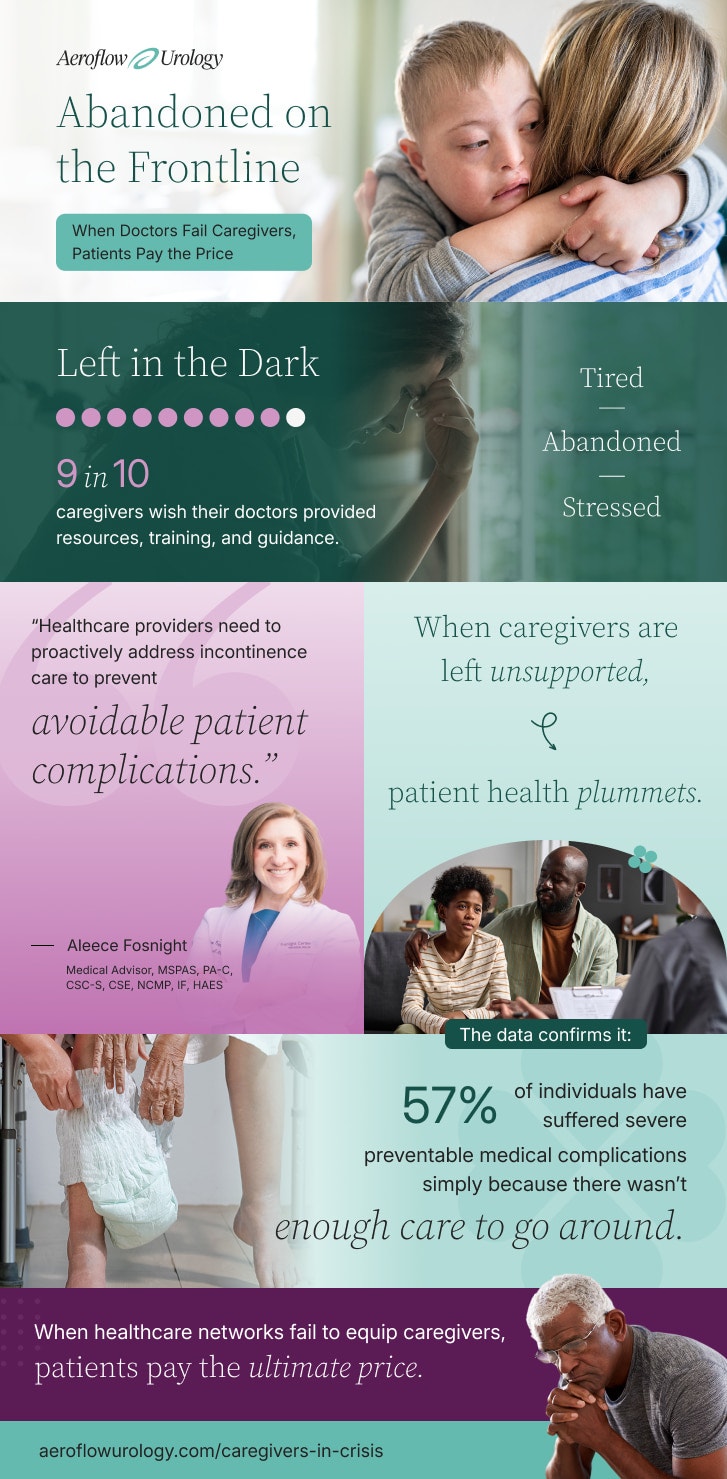
- Lack of family caregiver support is a public health issue. New data from our 2026 Caregivers in Crisis survey found that 57% of unpaid U.S. caregivers said their loved one experienced “serious complications from not receiving enough care.”
- More than 1 in 4 caregivers say that the biggest emotional drain is the constant fight against complex healthcare insurance systems.
- Pathways to paid family caregiver support exist, but the process can feel almost deliberately confusing, making it harder for caregivers to find help.


“It is a tough job, often lonely, always stressful,” says one caregiver from our 2026 Caregivers in Crisis survey.
We surveyed 1,144 unpaid U.S. adults caring for a loved one to uncover the main source of their concerns with caregiving. The majority point to cost (77% say they’re financially overwhelmed), and over half have reduced their work hours just to be there for their family in their most vulnerable moments.
Up to 90% share that they’ve recently experienced stress, anxiety, or depression, and two-thirds say that a lack of personal time and self-care is their largest emotional strain.
A disturbing 57% of caregivers are also sounding the alarm on a growing public health concern: that their loved one developed more serious complications from not receiving enough care.
All of these data points indicate a key denominator: the system needs to change. Families grappling with the growing cost of long-term care are faced with difficult choices regardless of socioeconomic status.
Caregivers have already done their part; now, it’s on healthcare leaders and policymakers to overhaul the very system that relies on them.
Families Deserve a Clear Path to Caregiving Support. Here’s How.
In the U.S., caregivers are already carrying significant responsibilities: 59 million provide care for adults, while another 4 million care for a child under 18 with an illness or disability.
Caregivers of adults are also 50.6 years old on average, and three in five of all caregivers are women.
Getting help can mean sorting through lengthy insurance rules, examining the requirements of Medicaid programs, respite care, home care waivers, and medical supply coverage while still juggling daily care.
When the rules and requirements are hard to understand or obscured by unclear language, these interconnected processes can feel like additional tasks that complicate the very act of caregiving itself.
We asked caregivers about their thoughts on their role. Some spoke about how caregiving “is stressful, mentally [taxing], financially challenging,” but also “worth it to take care of my husband instead of being in an institution.”
1. Simplify How Healthcare Teams Connect Families to Resources
Healthcare providers are often the first people families turn to when a loved one’s needs change. But the transition isn’t easy. “It’s hard to be dropped in at the deep end, and finding resources is difficult,” says a frustrated caregiver.
Starting the conversation early gives nurses, doctors, social workers, and care coordinators a chance to identify when a caregiver is taking on more than they can manage.
Mica Phillips, Executive Vice President of Aeroflow Urology, is advocating for change, stating, “These people deserve relief.” He added, “Caregiving is the ultimate, often invisible, sacrifice that serves as the backbone of American healthcare.”
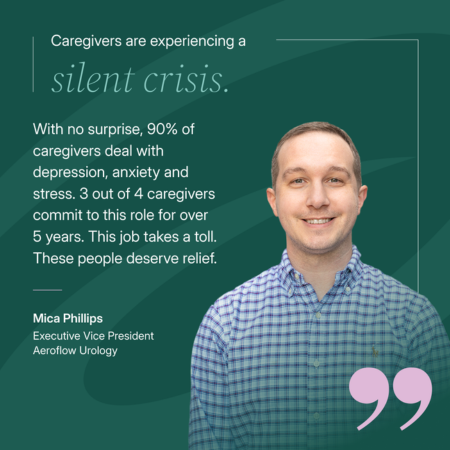
"With no surprise, 90% of caregivers deal with depression, anxiety and stress. 3 out of 4 caregivers commit to this role for over 5 years. This job takes a toll. These people deserve relief."
- Mica Phillips, Executive Vice President of Aeroflow Urology
Simple questions can uncover potential problems early, such as:
-
Do you understand what kind of care your loved one will need at home?
-
Who is helping you with your family caregiving responsibilities?
-
Do you have support if help isn’t available?
-
Will caregiving affect your work schedule?
-
Do you know if your loved one has insurance (such as Medicaid, Medicare, or private insurance) to cover the cost of caregiving?
-
Do you know what supplies your loved one will need each day, and what their insurance will cover?
2. Make Paid Care Easier to Access
If paid care is available, the process should be clear.
Unpaid care carries an enormous hidden cost, especially for families managing memory loss or cognitive decline. The Alzheimer’s Association 2025 Facts and Figures report, published in Alzheimer’s & Dementia, valued unpaid dementia caregiving at $413.5 billion.
Caregivers need to know who qualifies, what paperwork they must have, and how long approval may take.
Some programs may pay family caregivers for the care they already provide, though support varies widely by state. Other programs may pay for in-home care from a certified caregiver, respite care, adult day programs, or specialized childcare.
Healthcare professionals can help identify when a caregiver needs more support and how to help them receive it; however, for many families, knowing they need help is not the same as being able to afford it.
This indicates a worrying disconnect in the care system, where policy may need to be reexamined to better reflect the true costs of family caregiving.
Some caregivers are already living in that gap, “[My family was] labeled as “too rich” to need help… anything that helps the caregiver is considered uncovered by the insurance company, most things required to keep [my loved one] clean and healthy (i.e. free from infection) are not covered, they took away the assistance she got for food because we pooled our resources as a family and cooked together to save money and she can never move out because we would have to dump her at a homeless shelter before [the government] would offer assistance.”
3. Cover the Cost of Basic Care Supplies
For many Americans, the cost of care rarely, if ever, stops at appointments and prescriptions. Families generally shoulder the cost of basic care supplies such as diapers, underpads, wipes, gloves, and other products their loved one needs daily.
Data gathered from our 2023 survey, Diaper Divide, found that in some cases, caregivers report having to choose between incontinence supplies and necessities, such as food, electricity, or transportation.

"Healthcare providers need to proactively address incontinence care to prevent avoidable patient complications"
- Aleece Fosnight, Medical Advisor, MSPAS, PA-C, CSC-S, CSE, NCMP, IF, HAES
When there is a medical need, families should be informed in advance whether Medicaid, Medicare, or insurance may help cover those products, so no one has to make these unimaginable choices.
Know a Family Caregiver?
We believe incontinence supplies should be affordable and accessible, so it's our mission to partner with as many providers as possible to get their supplies covered.
Care Recipients: In Their Own Words
It isn’t enough to ask caregivers about their experience. To understand the whole picture, we also asked people who receive care from their loved ones.
Zelda, a care recipient, shares their story: "I am currently cared for by my husband and youngest son, both of whom are disabled but provide wonderful care. Despite their dedication, the current system does not cover enough essential products for my needs each month.
This creates a significant financial burden, forcing my oldest daughter to pay for these supplies out-of-pocket. This adds roughly $40 to our weekly grocery costs.
Furthermore, I have seen no evidence of the training and education for caregivers that is often talked about; in fact, none of my providers have ever asked how my caregivers are doing or even broached the subject with them, despite them both accompanying me to my visits. My husband, who has both Medicare and Medicaid, is not receiving the support he needs either. My family is doing their best, but we are in urgent need of better access to the resources, support, and coverage required to sustain our daily health and stability."
What Healthcare Leaders and Policymakers Must Do to Support Family Caregivers
More than idle words of support, unpaid family caregivers in the U.S. need action.
Up to 89% of caregivers say that they wish their doctors provided more assistance and resources. However, this need isn’t limited to income or region, and instead stretches across the country, reaching families who are connected by the loss of sleep and the hours missed from work.
Healthcare providers can help connect families to critical resources by asking who is there to help at home and by documenting their loved one’s medical needs.
Policymakers can make paid caregiving, respite care, home-based services, workplace protections, and covered supplies easier to access.
There is a path forward that is not fraught with unending calls, unclear rules, and support that comes too late.
Resources & Support
Our commitment goes beyond providing bladder control supplies. We launched our Caregivers in Crisis campaign to give caregivers a voice, advocate for policy change, and connect families with the resources they need.
Are you a healthcare professional?
We’re here to help your patients find the support they need. To do that, we connect them with free, medical-grade incontinence supplies, such as diapers or underpads, covered by Medicaid or insurance.
Our 2-Step Referral Process:
-
Diagnose & prescribe: If your patient has a medical need for incontinence supplies and is enrolled in a qualifying insurance plan, download our Patient Order Form to prescribe the appropriate products.
-
Connect with Aeroflow Urology: Ask your patient’s caregiver to submit their loved one’s insurance information through our form, and we’ll help determine coverage and next steps.
Are you a family caregiver?
We’re here to support your caregiving journey. Get support for your loved one by receiving $0 bladder control supplies covered through Medicaid or insurance.

Submit your loved one’s information, call their doctor, select their products, and we'll ship them to you each month.
Frequently Asked Questions
Can the level of caregiver support affect patient health outcomes?
Yes, our 2026 Caregivers in Crisis survey found that when family caregivers lack sufficient support, it can significantly affect the person receiving care. A total of 57% of participants reported that their loved one experienced more serious complications because they could not provide enough care.
How many SNAP recipients live in caregiving households?
Nearly 40% of caregiving households from our 2026 Caregivers in Crisis survey said that they rely on the Supplemental Nutrition Assistance Program (SNAP) to care for their loved ones.
What is the biggest concern for U.S. family caregivers?
Family caregivers say that the rising cost of caregiving is their biggest concern. Up to 77% — over 3 in 4 respondents — said that they feel “financially overwhelmed” by the cost of caregiving.
What do family caregivers wish healthcare providers did differently?
Up to 89% of family caregivers say they wish their doctors provided “more assistance” and “more resources” to help them handle the responsibilities of caring for their loved ones.
How many caregivers are there in the United States?
According to 2025 data from AARP, there are 63 million family caregivers across the country.
How much are family caregivers paying for monthly hygienic supplies?
Our 2026 Caregivers in Crisis survey found that 1 in 4 caregivers are spending more than $500 a month ($6,000 a year) on caregiving supplies, such as adult diapers, underpads, and more.
Mica Phillips

Mica has been at Aeroflow for over ten years. He brings creativity to a sometimes stagnant and complacent industry and tries his best to uncomplicate the complex world of Insurance. He is a graduate of the University of North Carolina and holds a Bachelor’s degree in English. In addition to his daily responsibilities as Executive Vice President of Aeroflow Urology, he’s contributed to numerous articles for online journals regarding senior care, incontinence, and navigating insurance benefits. In his spare time, he enjoys listening to live music, visiting breweries, and traveling the world with his wife and daughter.
About the Author
Tiff Perritt is the Content Writer at Aeroflow Urology. She writes with clarity and compassion on topics surrounding incontinence, aiming to help patients feel informed and supported. Driven by a strong interest in health equity, she supports efforts that promote education and access to incontinence care for underserved communities.
She earned her Bachelor's degree in Technical Communications from University of Houston - Downtown and her Associate's degree in English from Lee College. Her work has been featured by leading healthcare colleges and respected healthcare organizations across the country.
Outside of work, she loves to hike across the Texas landscape, try out new baking recipes, and spend time with her family.
Sources
Caregivers in Crisis Survey. 2026 Family Caregivers in Crisis Survey. Aeroflow Urology
References
AARP & National Alliance for Caregiving. (2025). Caregiving in the US 2025. [PDF Report].
AARP & National Alliance for Caregiving. (2025, July 24). Caregiving in the US 2025. AARP. [Web Page].
Aeroflow Urology. Help us end diaper need.
Alzheimer's Association. (2025, April 29). 2025 Alzheimer’s disease facts and figures. Alzheimer’s & Dementia, 21(5), e70235.
Caregiver Action Network. (n.d.). The caregiving landscape: Data & insights on the caregiver experience in the U.S.
Disclaimer
Information provided on the Aeroflow Urology blog is not intended as a substitute for medical advice or care from a healthcare professional. Aeroflow recommends consulting your healthcare provider if you are experiencing medical issues relating to incontinence.
Eligibility and coverage are determined by your state Medicaid program and/or insurance plan. Coverage, quantity limits, medical necessity requirements, and prior authorization requirements may apply.