How to Get a Free Car Seat With Medicaid or Insurance
-
 By
Tiff Perritt
By
Tiff Perritt
Key Takeaways:
- If you’re a parent to a child with special needs, you may qualify for a free car seat through your insurance or Medicaid plan.
- We reached out to Christine Thornton (@itsmamacookie) to learn how she secured a car seat for her son and how it’s made a difference for her family.
- Along with a car seat, your family’s health insurance plan or child’s Medicaid plan may cover the cost of bladder control supplies, such as diapers, pull-ons, or underpads.
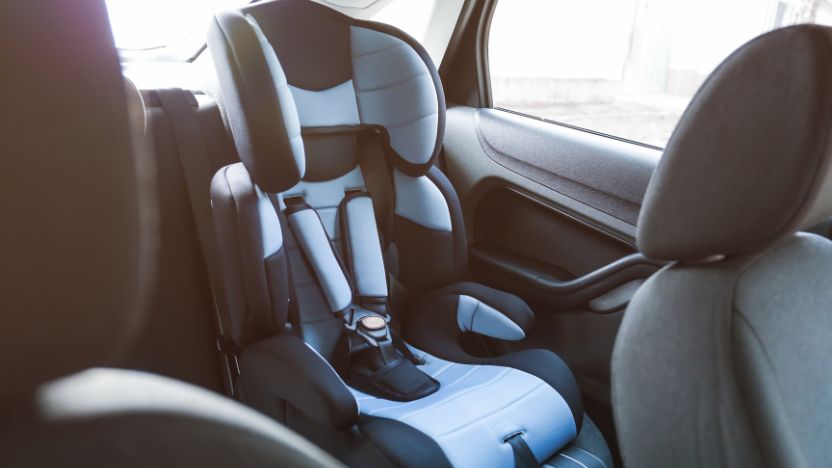
Did you know that you may qualify for a free car seat through insurance or Medicaid if your child has a medical need?
Some insurance plans may cover the cost of a special-needs car seat if a standard car seat is unsafe for your child. However, having insurance doesn’t automatically guarantee you’ll receive a car seat.
We spoke with Christine Thornton (@itsmamacookie) to learn how she received an adaptive car seat for her child. Plus, find out what to do if insurance won’t cover the cost of a car seat and what other insurance-covered benefits you may be missing out on, like $0 diapers and pull-ons.
Can You Get a Free Car Seat Through Insurance?
Yes, you may be able to receive a no-cost car seat through insurance if your child meets certain requirements. One of the most common reasons you may qualify for an adaptive, medical, or special-needs car seat is if your child:
-
Needs extra support for their head, neck, or body.
-
Has breathing or positioning needs that require a specific seating position while traveling.
-
Experiences muscle or movement challenges that prevent your child from staying safely positioned in a standard car seat.
-
Requires additional support beyond a standard car seat, booster seat, or seat belt due to developmental, behavioral, or medical needs.
Another reason insurance may cover the cost of your child’s car seat is if your child is known to wander, also known as elopement. About half of children and youth with autism spectrum disorder (ASD) have been reported to wander.
Christine shares that getting a car seat for her son made “car rides much easier,” adding that “before the medical car seat, he would jump out of his car seat in the middle of us driving. When we were stopped, he would be able to get out of the car and elope. This seat keeps us all safe!”
Did You Know? While Aeroflow Urology is unable to help with covering the cost of a car seat, your child may qualify for $0 diapers, pull-ons, and other bladder control supplies through Medicaid or insurance.
How to Get a Free Car Seat Through Insurance in 3 Steps
According to Consumer Reports, buying a car seat will typically cost you several hundred dollars.
However, a special-needs car seat can go upwards of thousands, depending on the accommodations your child needs.
But you should know: your family’s insurance may cover a special-needs or adaptive car seat if your child has a medical need for one.
We asked Christine what advice she would give if someone is trying to find out if their insurance will even cover a car seat: “Talk with your pediatrician! Call your insurance as well.” She also added, “Explore every option. Someone will have resources.”
Remember, the process can take time, so gather all the necessary paperwork from your child’s healthcare providers.
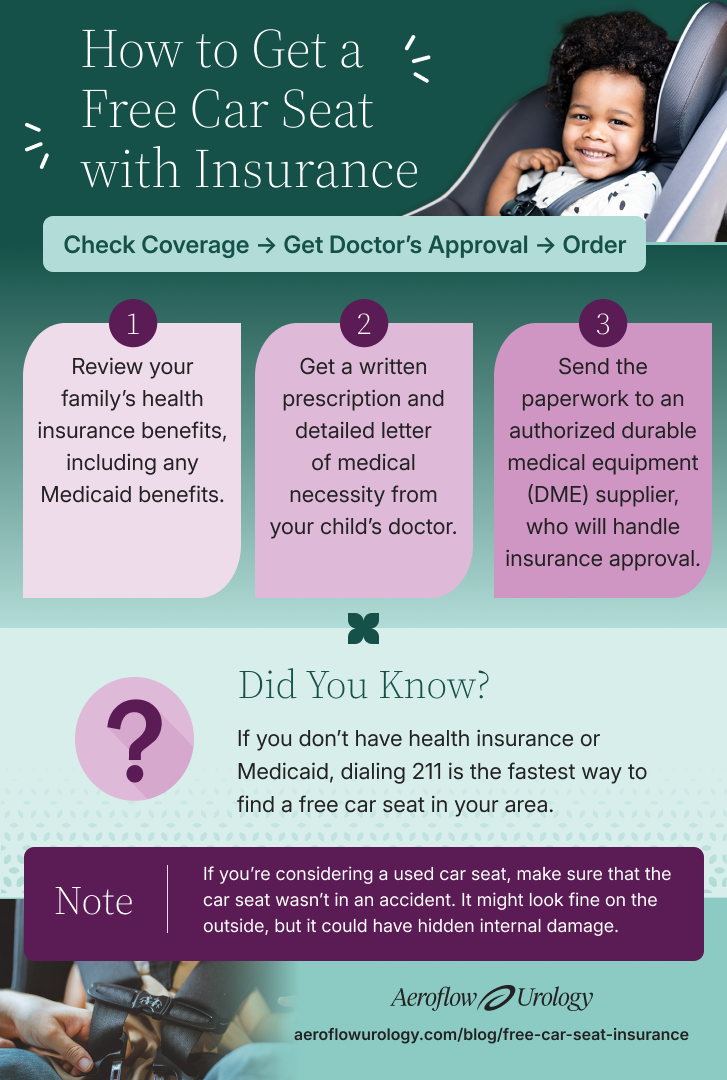
Step 1. Check Your Health Insurance Benefits
Start with your insurance plan’s member portal, member handbook, or by calling the number on your child’s insurance card or Medicaid card.
Look for phrases online or in the insurance handbook like “benefits,” “extra benefits,” or “value-added benefits.”
You can also call directly to ask if your child’s insurance plan covers an adaptive car seat if a standard car seat isn’t safe or supportive enough for their medical needs.
Step 2. Get a Prescription and Letter of Medical Necessity (LMN)
Get a written prescription and a letter of medical necessity from your child’s doctor. This will help your insurance company with covering the cost of the car seat.
Make sure that the documents clearly explain why a standard car seat can’t meet your child’s needs. You can do this by providing details about your child’s diagnosis.
The more specific you are, the faster they may be able to process your insurance claim.
| Car Seat Purchase Type | How to Get One | Requirements |
|---|---|---|
| Free or Low-Cost Adaptive Car Seat | Contact your family’s private insurance plan, including Medicaid. Check if your community has a local car seat program. | Eligibility requirements vary; you may need proof of eligibility, a prescription, medical documentation, and prior authorization. |
| Free or Low-Cost Standard Car Seat | Contact your family’s private insurance plan, including Medicaid. Check if your community has a local car seat program. | Eligibility requirements vary; some programs require a car seat safety class. |
| Out-of-Pocket Car Seat (Standard or Adaptive) | Purchase directly from a retailer or specialty supplier. | You pay the full cost. |
Step 3. Submit Your Paperwork
Once you have your child’s prescription and letter of medical necessity, ask your insurance plan where the paperwork should go.
Some plans may allow you to work with any durable medical equipment (DME) supplier, while others require you to use specific suppliers.
What to Do If You Don’t Have Insurance or Insurance Won’t Cover Costs
If your insurance plan doesn’t offer coverage for a car seat, you still have options. Local health departments, hospitals, community organizations, nonprofits, and child passenger safety programs may offer free or low-cost car seats for children with special needs.
You can also dial 211 or find your local 211 website to ask where you can find a car seat for your child.
What Else Does Medicaid or Insurance Cover for Kids?
If you’re caring for a child with special needs, you should know that Medicaid and insurance may also cover the cost of supplies like diapers, underpads, and more. Here’s how:

It's easy to get free supplies like diapers or pull-ons. Submit your child's information, call their doctor, choose their products, and we'll ship your supplies monthly.
Frequently Asked Questions
Does WIC have a free car seat program?
If you’re enrolled in the Women, Infants, and Children (WIC) program, your local WIC office may be able to help you secure a car seat at no cost by referring you to a safety program.
Where can I find a free car seat program near me?
To find a free car seat program near you, dial 2-1-1 to connect with local community resources. They can connect you with local programs that may provide a car seat for your child. If you have Medicaid or insurance, you can also try contacting your health insurance provider.
Can you get a free special needs car seat with Medicaid?
Yes, if your family has Medicaid coverage, you may be able to receive a special needs car seat if it's considered medically necessary. The requirements to receive a car seat through Medicaid vary by state, and you’ll need to have a written referral or prescription from your child’s doctor.
Can you get a free special needs car seat through insurance?
Yes, some health insurance plans cover medically necessary special needs car seats, but having insurance doesn’t mean you’ll receive the car seat for free. To see if your child qualifies for a car seat, contact your insurance company and ask if you’ll have to pay anything out-of-pocket.
Does insurance cover the cost of a car seat replacement?
Insurance may sometimes cover the cost of replacing a car seat in some situations, even if the car seat looks undamaged. Contact your auto insurance company to see if they’ll cover the cost of a replacement.
Will insurance reimburse my child’s car seat?
Before buying a car seat, always ask your insurance if they allow reimbursement. Some plans may only cover the car seat if it’s ordered through an approved supplier, so it’s best to confirm with your insurance before buying anything.
Should I get a used car seat?
If you’re considering a used car seat, always make sure that the car seat wasn’t in an accident. It might look fine on the outside, but it could have hidden internal damage.
Can I choose the car seat I receive through insurance?
Sometimes, but your choices depend on the insurance program.
Christine Thornton
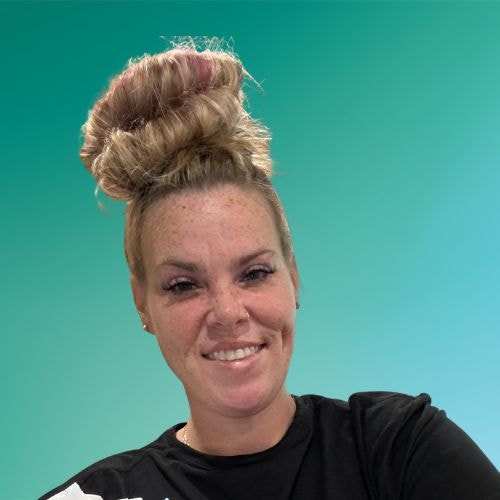
Christine Thornton, also known as @itsmamacookie, is a lifestyle and family TikTok creator with over 6 million followers. She's also partnered with Aeroflow Urology to help families of children with incontinence receive the insurance-covered supplies they need, like diapers, pull-ons, and more.
About the Author
Tiff Perritt is the Content Writer at Aeroflow Urology. She writes with clarity and compassion on topics surrounding incontinence, aiming to help patients feel informed and supported. Driven by a strong interest in health equity, she supports efforts that promote education and access to incontinence care for underserved communities.
She earned her Bachelor's degree in Technical Communications from University of Houston - Downtown and her Associate's degree in English from Lee College. Her work has been featured by leading healthcare colleges and respected healthcare organizations across the country.
Outside of work, she loves to hike across the Texas landscape, try out new baking recipes, and spend time with her family.
References
Centers for Disease Control and Prevention. (2026, January 28). Wandering (elopement). U.S. Department of Health and Human Services.
Consumer Reports. (n.d.). Car seats.
Indiana University Automotive Safety Program. (n.d.). Child restraint options.
United Way 211. (n.d.). Your local 211.

Tiff Perritt is the Content Writer at Aeroflow Urology. She writes with clarity and compassion on topics surrounding incontinence, aiming to help patients feel informed and supported. Driven by a strong interest in health equity, she supports efforts that promote education and access to incontinence care for underserved communities.
She earned her Bachelor's degree in Technical Communications from University of Houston - Downtown and her Associate's degree in English from Lee College. Her work has been featured by leading healthcare colleges and respected healthcare organizations across the country.
Outside of work, she loves to hike across the Texas landscape, try out new baking recipes, and spend time with her family.