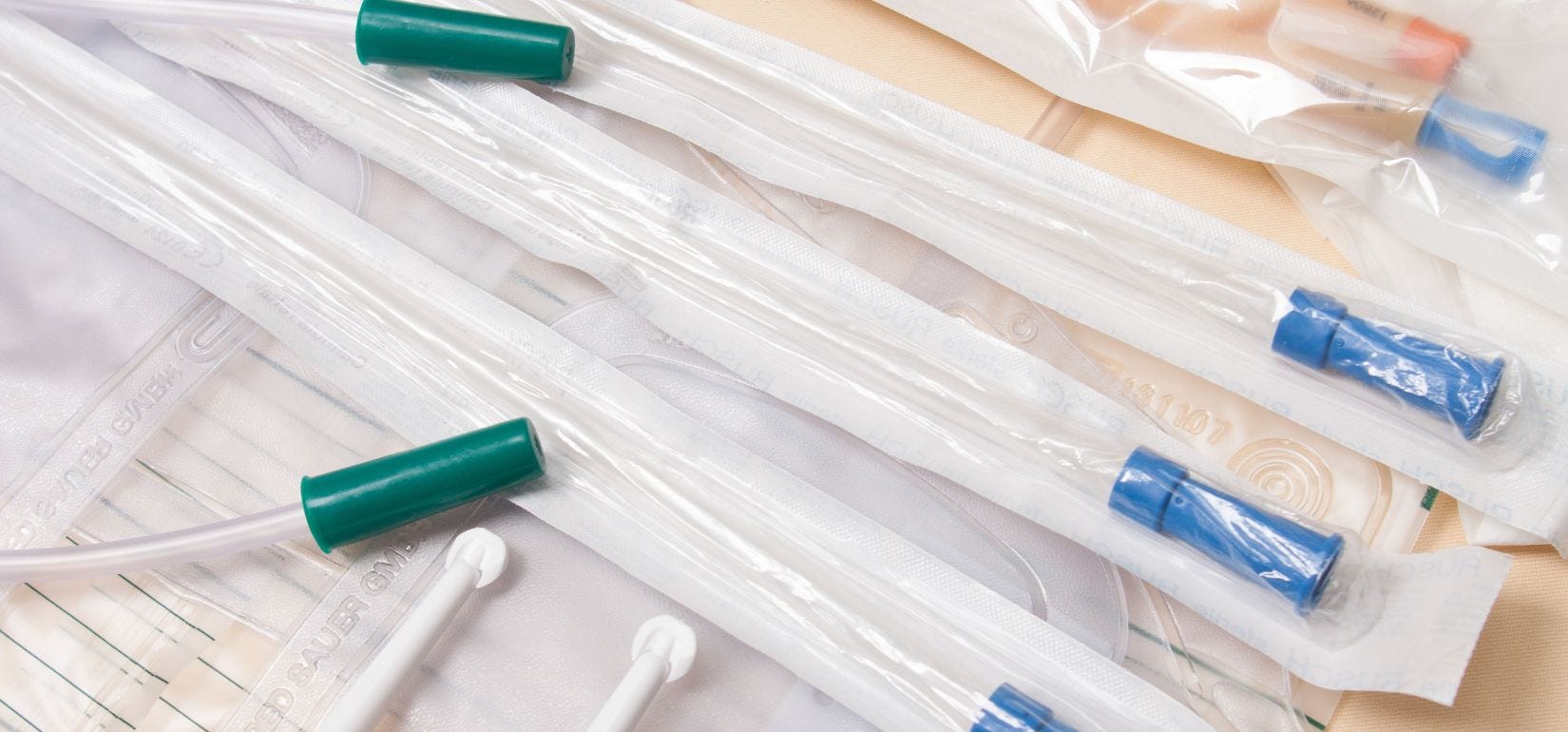
How to Avoid Catheter Blockages & Obstructions
, by Aleece Fosnight .
#html-body [data-pb-style=YE0DMYX]{justify-content:flex-start;display:flex;flex-direction:column;background-position:left top;background-size:cover;background-repeat:no-repeat;background-attachment:scroll;margin:0;padding:0}
#html-body [data-pb-style=Q7AFSQP]{justify-content:flex-start;display:flex;flex-direction:column;background-position:left top;background-size:cover;background-repeat:no-repeat;background-attachment:scroll;margin:0;padding:0}This content was last medically reviewed on Mar 1, 2024 by Aleece Fosnight, MSPAS, PA-C, CSC-S, CSE, NCMP, IF, HAES.
#html-body [data-pb-style=MJX8B0O]{justify-content:flex-start;display:flex;flex-direction:column;background-position:left top;background-size:cover;background-repeat:no-repeat;background-attachment:scroll;margin:0;padding:0}
One of the most common complications that can occur for catheter users is a catheter blockage. Catheter blockages often form from a buildup of minerals, salts, and crystalline deposits which can block the eye holes of the catheter and prevent urine from draining from the bladder. These obstructions often begin as a small obstruction and can develop fully to a complete blockage. More often than not, these blockages will affect long-time catheter users.